



4-door steel and glass filing cabinet vs 2-door: which fits large teams?
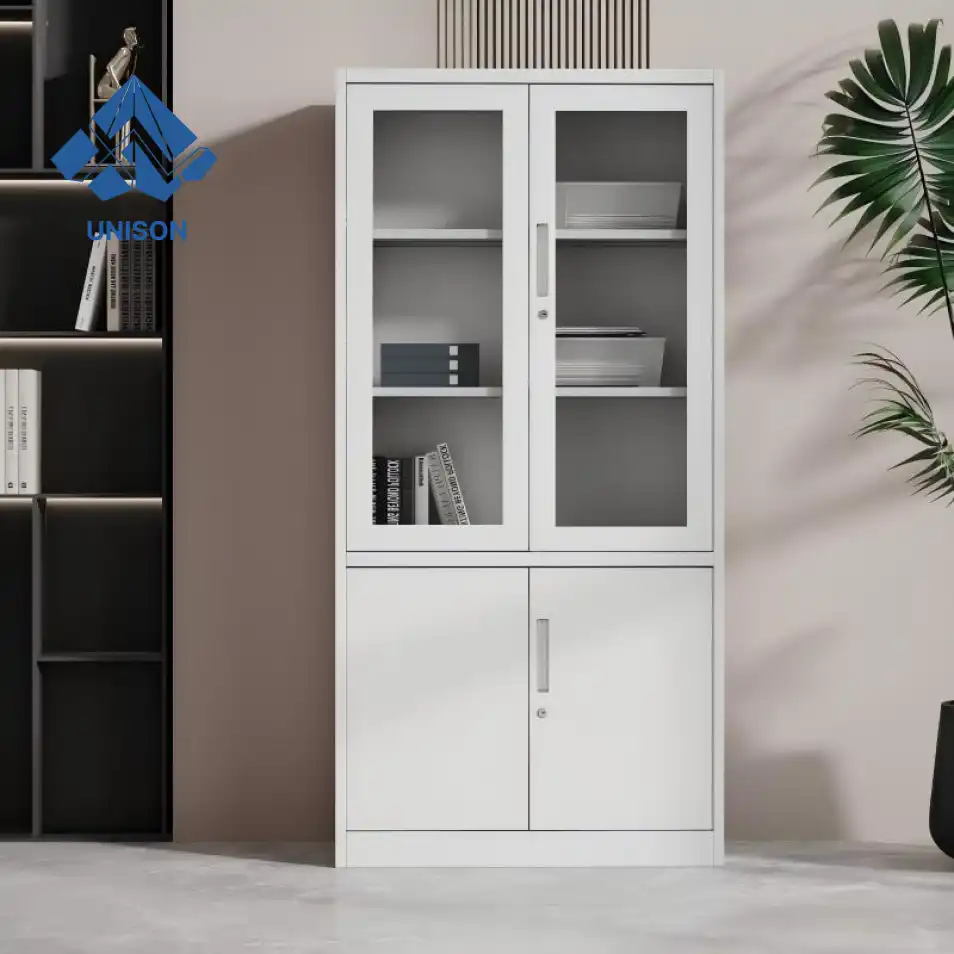
When getting filing cabinets for big groups of people, the question of whether to get a standard two-door model or a Four-Door Steel and Glass Filing Cabinet comes up a lot. The answer relies on how your team works and how much space they have. A four-door configuration is much better for keeping track of large amounts of documents across multiple departments. This is especially true for regional distributors who are coordinating inventory records, project contractors who are juggling blueprints and compliance paperwork, and institutional buyers who are storing long-term records. The two-zone design splits frequently used items in the upper sections with glass fronts from private papers that are kept safe behind lower steel doors. When compared to two-door units, where everything is hidden behind uniform panels, this vertical division cuts recovery time by about 30%. Two-door cabinets, on the other hand, are better for smaller teams that don't need as much filing space or for projects that are on a budget and don't need advanced organization features.
Understanding Filing Cabinets for Large Teams: 4-Door vs 2-Door
Choosing between filing cabinet configurations isn't merely about counting doors—it's about matching storage architecture to operational realities. In B2B procurement environments, where reliability directly impacts productivity, understanding these structural differences proves essential.
Core Structural Differences
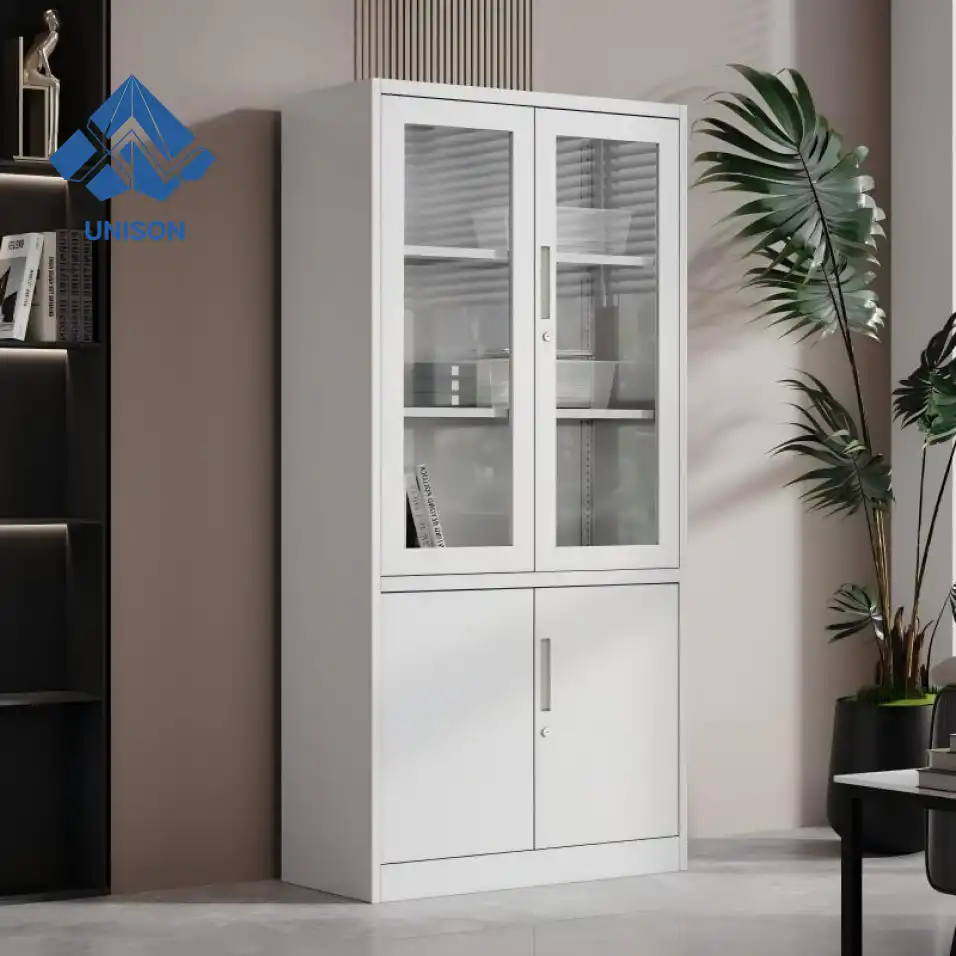
Most two-door file cabinets are between 36 and 72 inches tall and have simple vertical storage with standard sections. They work well enough for small offices or use by a single department where paper types are limited. The steel and glass filing cabinet with four doors, which is 1850 mm (73 inches) tall, increases both space and utility. This higher shape has four separate storage areas, which means you can organize things twice as easily. The top two sections have clear glass screens that make it easy to see which folders, reference materials, and current project files are which. The lower steel doors keep private papers like employment records, financial statements, and unique specs out of plain sight. Three-point closing systems provide strong security.
Material Advantages in Professional Settings
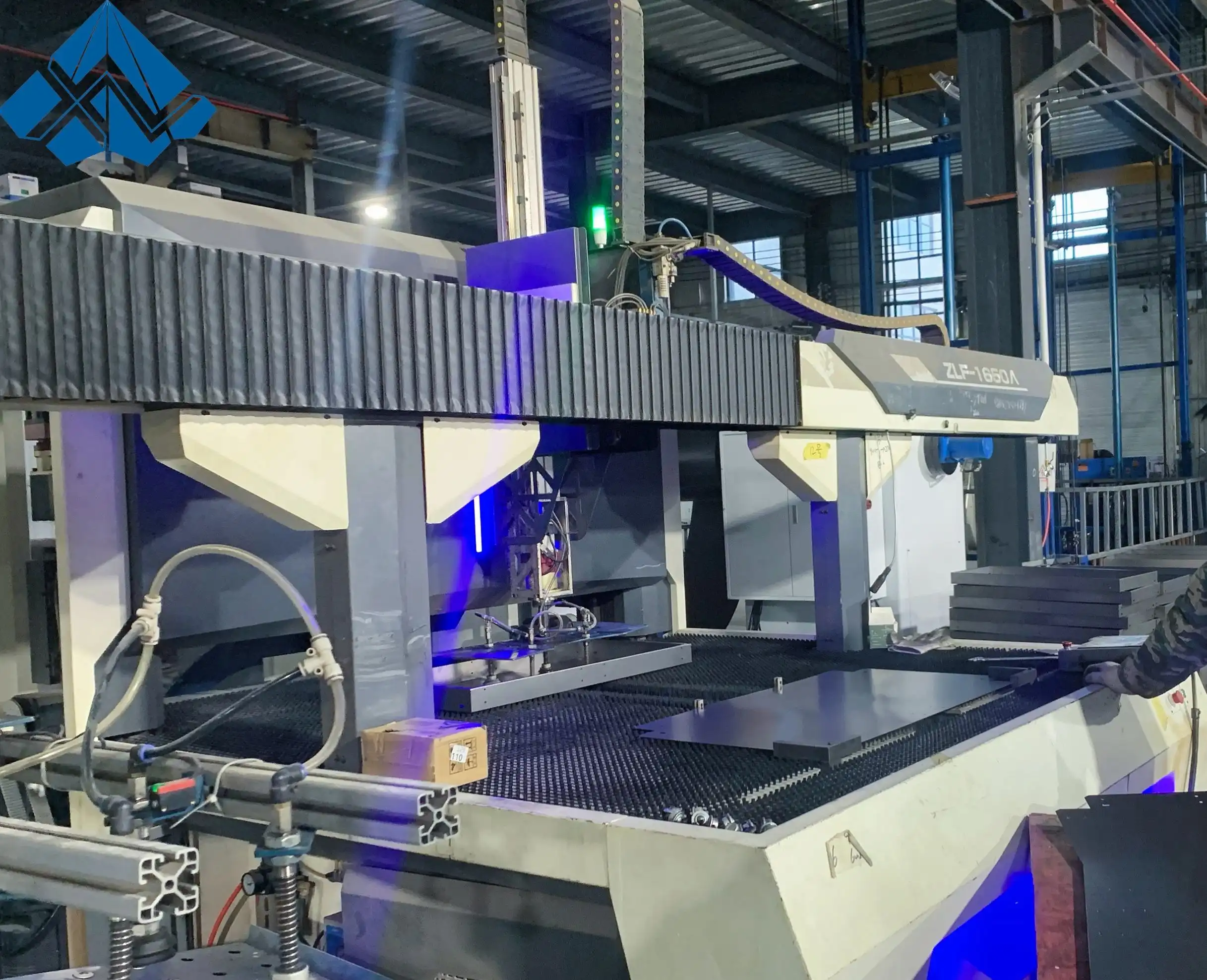
Building with steel and glass solves problems that wooden or plastic options have in tough settings. Precision cold-press bending shapes cold-rolled carbon steel into strong structures that can handle daily use in busy offices, hospital executive halls, or school record rooms. After powder coating, the surface is baked at a high temperature to make a finish that doesn't let water in or wear away at the surface. This is important for wet places or places where cabinets are often touched. Tempered glass panels give a modern look without losing sturdiness; they are much better at absorbing hits than regular glass and keep their brightness over years of use.
Application Relevance Across Industries
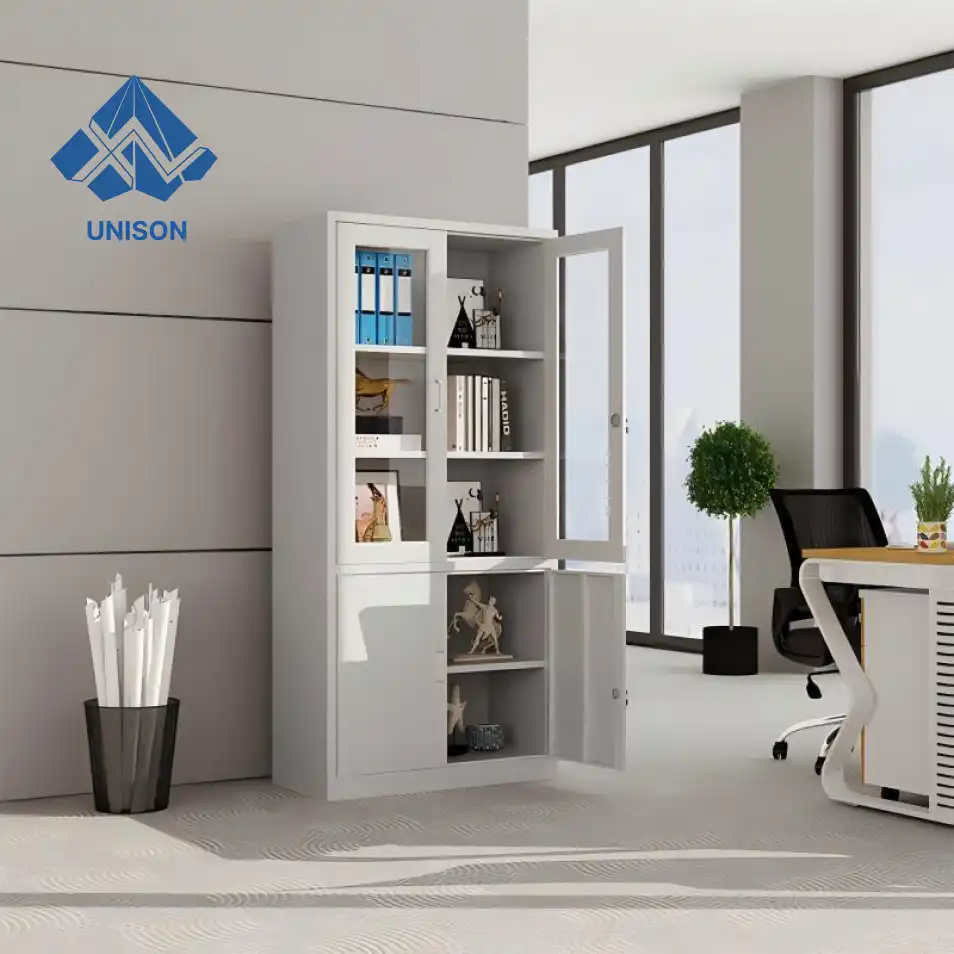
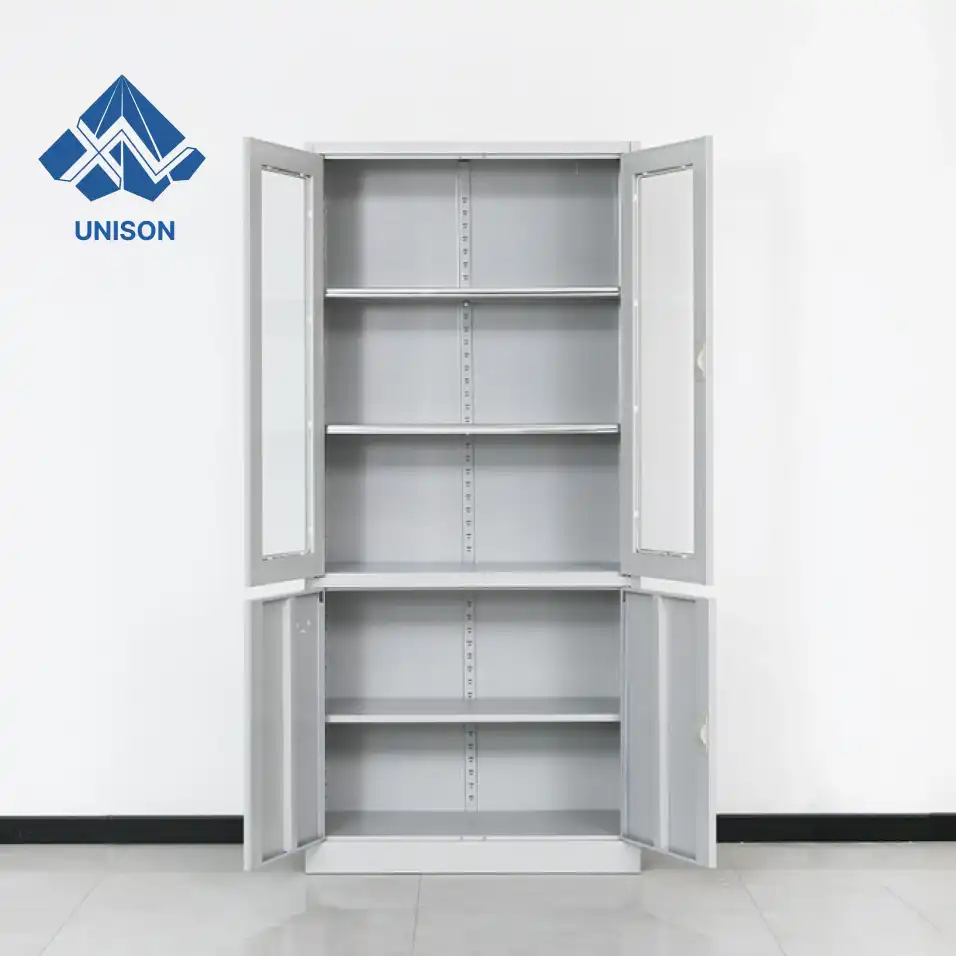
Different fields need different ways of storing things. The four-part system that splits current orders from old records is helpful for wholesale wholesalers who are in charge of catalogues, supply contracts, and shipping paperwork. When engineering companies are working on multiple projects at the same time, they can assign each door part to a different contract. This keeps files from getting mixed up when time is running out. Institutional buyers in hospitals or schools like the standard sizes (850 mm width, 400 mm depth) that make them easy to fit into flexible office plans and meet safety standards. Because the shelves inside each section are movable, they can fit a wide range of document sizes, from normal letter files to large plans or medical charts. This is something that two-door models often lack because their interiors aren't as flexible.
Functionality and Space Utilization: Which Cabinet Meets Large Team Needs?
Practical usability determines whether a filing system enhances or hinders team performance. Large teams generate document volumes that quickly overwhelm inadequate storage, making capacity and accessibility paramount considerations.
Capacity Analysis and Physical Footprint
The 1850x850x400mm dimensions of the Four-Door Steel and Glass Filing Cabinet make the most of vertical storage without taking up too much floor space, which is very helpful in offices where the cost of square feet is high. Each shelf can usually hold between 40 and 60 kg of evenly distributed weight, which means it can hold thick stacks of files or heavy reference books that would put stress on less sturdy systems. Putting two separate two-door cabinets next to each other would take up about 900–1000 mm of wall space (to account for door swing room), but a single four-door unit can hold the same amount of things in 850 mm of space. This 15-20% increase in space economy is very significant in crowded office areas or when arranging many rooms in big buildings.
Glass Panel Transparency and Workflow Optimization
Every day, document access is changed by transparency. The upper sections with glass doors get rid of the guessing that slows down work when workers have to open multiple doors to find the files they need. Teams that access legal documents, client bids, or inventory reports dozens of times a day save 5 to 10 seconds each time they're retrieved, which adds up over the course of a week's worth of transactions. This makes people more responsible, too, because managers can quickly check that filing rules are being followed during exams without messing up well-organized systems. The lower steel sections balance this openness by hiding things that need to be kept secret. This way, HR files, financial data, or confidential research can stay private without having to buy separate cabinets.
Safety and Accessibility in High-Traffic Environments
If cabinet doors suddenly swing outward in a busy office, people could hit each other. This problem is solved by the four-compartment design: each smaller door needs less space than the higher doors on two-door models, so there is less blockage in the tight spaces between workspaces. The strengthened shelving with supporting ribs keeps the shelves from falling even when they are fully loaded. This means that the contents of shelves that fall over won't be spilled. When working in a space with a range of people, from young office workers to older staff, putting frequently used glass sections at mid-height makes it easier on the body than when important files are close to the floor or out of reach.
Comparing Performance and Durability for Heavy-Duty Usage
Procurement decisions carry long-term consequences. Understanding durability differences between cabinet types protects organizations from costly, premature replacements and productivity losses.
Material Performance Under Demanding Conditions
In many important ways, cold-rolled steel is better than wood, particle board, and plywood. Impacts don't dent the material because it is naturally strong. This is important when moving tools through small areas or when moving a facility. The nine-step pre-treatment process that steel units go through makes them more resistant to rust than painting wood, which breaks down when it comes into contact with dampness or temperature changes that happen a lot in buildings with variable climate control. The powder coating is electrostatic and sticks to the steel surface at the molecular level. This makes a finish that won't chip, peel, or fade even after years of use. This sturdiness is especially helpful for business buyers who need products to last for decades or for building owners whose storage systems have to deal with tougher environments.
Tempered Glass Durability and Maintenance
The 3–4 mm toughened glass used in good four-compartment cabinets is heated, which makes it three to five times stronger against pressure than regular glass. If it does break, which is unlikely because the frame is designed to protect it, the toughened glass breaks into small, flat pieces instead of dangerous bits, meeting safety standards for the workplace. Daily upkeep only needs to be cleaned once in a while with a regular glass cleaner. This is different from wood veneers, which need to be polished in a special way, or particle board surfaces, which get stained forever. The glass will always be clear, but plastic replacements will yellow and cloud over time, making it impossible to see what's inside and losing their viewing benefits.
Long-Term Cost Considerations
When you figure out the total costs of ownership, you can see benefits that might not be obvious from comparing prices alone. A well-built steel and glass cabinet will last 15-20 years with only minor upkeep (lock greasing and hardware fixing every so often). Cheap wood or plastic units, on the other hand, will only last 5–8 years. The gap gets even bigger when teams ordering 50 to 100 cabinets for a new building do it all at once. Warranty coverage from ISO 9001-certified makers gives you extra safety. Companies with Quality Management System Certification show that they follow consistent production standards that lower failure rates and support reliable service after the sale.
Procurement Considerations: How to Choose and Where to Buy
Smart procurement balances immediate needs against long-term value. Several factors guide selection toward optimal outcomes for organizational storage investments.
Budget Planning and Bulk Order Economics
Unit prices for Four-Door Steel and Glass Filing Cabinet go down a lot when you order a lot of something, which is a fact that smart procurement managers use to their advantage. When you order 20 or more cabinets, you can usually get a 10-15% discount, and when you order over 100 units, you can get a 20–25% discount. These savings help cover the higher cost per unit of quality steel construction compared to economy models. When making a budget, delivery times are taken into account. Standard production runs are finished in 25 days, but if you have unique needs, this could take up to 35–40 days. By planning your buying cycles around these wait times, you can avoid expensive rush shipping and project delays.
Customization Capabilities and Brand Flexibility
Manufacturers that offer ODM and OEM services are helpful for businesses that have to deal with limited space or strict design standards. Customizing the colours to RAL or Pantone standards makes sure that cabinets match company logos or building design plans. This is important for areas of hotels or professional office buildings that are visible to customers. Changes to the dimensions can be made to fit different nook sizes or ceiling heights without weakening the structure. Brand owners and online sellers can put their own labels on units that have already been bought. This makes the products stand out in markets where competition is high. Suppliers with registered brands and useful patents (for example, designs for folding cabinets) show that they are committed to innovation, which leads to better product development.
Sustainability and Compliance Verification
Environmental duty is becoming more and more important to procurement teams. Manufacturers who have ISO 14001 Environmental Management System Certification show that they follow environmentally friendly practices like recycling programs, lowering pollution, and proper trash management. Steel is naturally recyclable, which helps with circular economy goals. For example, old cabinets can be fully recycled without losing any of their quality, while composite materials end up in landfills. Verification of GB/T 28001 Occupational Health and Safety Management System Certification makes sure that production takes place in an ethical way, which addresses concerns about supply chain openness made by buyers who care about the environment.
Supplier Evaluation Criteria
Quality inconsistencies can be avoided by telling the difference between trusted providers and common sellers. Established makers with 20 years or more of experience in the field show operating steadiness and a wealth of knowledge that younger companies don't have. Wide types of products show that a company can make a lot of different things. For example, companies that sell filing cabinets, lockers, and hostel beds along with filing cabinets are very good at making things that are of high quality across all of their lines. Misspecifications that cause project problems can be avoided by getting professional technical help during the buying and delivery processes. Global transportation networks make sure that packages get delivered reliably to international places, which is very important for wholesalers who are planning rollouts at multiple sites.
Making the Decision: Which Filing Cabinet Fits Your Team Best?
Aligning storage solutions with operational requirements transforms filing systems from necessary overhead into productivity assets. Strategic selection considers several organizational variables.
Team Size and Document Volume Assessment
Teams with more than 15 to 20 people quickly produce too many files for two-door cabinets to handle. The 4-door glass-steel file cabinet layout makes it easy to separate files by department: sales records go in one area, operational paperwork goes in another, HR materials go in a third, and financial files go in the fourth. This division cuts down on filing mistakes between departments and speeds up checks by putting together papers that are related. On the other hand, two-door types work well and are more cost-effective for satellite offices with five to eight workers and little paperwork.
Security Requirements and Access Control
Strong physical protection is needed for organizations that deal with private information. Four-door steel types have a three-point locking system that engages at the top, middle, and bottom. This makes them much harder to break into than simple cam locks on budget cabinets. Buyers from institutions that handle student records, patient information, or government contracts must follow strict data protection rules. Good locks and a steel building help these buyers meet these rules. Separately locking the top and lower sections gives you more control, letting younger employees see reference materials but only letting authorized staff see private files.
Real-World Implementation Results
A regional delivery business that sells office furniture all over the southwestern United States put 80 four-door cabinets in their storage and office areas. Their purchasing manager said that getting inventory records was 40% faster and that misfiled shipping papers that were slowing down orders were no longer a problem. The hospital's administrative department noticed better regulatory audit performance after replacing old wooden cabinets with steel and glass units. Inspectors could check the order of records through glass panels without having to touch the filing systems. An engineering company that was in charge of multiple building projects at the same time gave each ongoing contract its own door area. This cut the average time it took to get blueprints from 4 minutes to less than 90 seconds, which is a big time saver when several team members need to access them every day.
Conclusion
When deciding between four-door and two-door filing boxes, you need to think carefully about the size of your team, how you handle documents, and your long-term value goals. Four-door steel and glass designs offer measured benefits for big teams, including better organizational division, better sight through glass panels, strong security features, and space-efficient vertical storage that makes the most of office space. Cold-rolled steel construction and toughened glass make sure that the product will last for decades, backing total cost of ownership estimates that choose quality over cheaper options. When procurement pros have to choose between usefulness and price, four-compartment models are a good choice because they improve process speed and cut down on filing mistakes across departments. Companies that value standard solutions, regular quality, and dependable suppliers can benefit from buying from companies that have ISO certifications and a history of working in the industry.
FAQ
What makes four-door filing cabinets better than two-door models for large teams?
Four-door configurations provide vertical compartmentalization that naturally supports departmental document separation and reduces retrieval time through better organization. The glass panel visibility in the upper sections eliminates guesswork when locating frequently accessed files, while the lower steel compartments secure confidential materials. This dual-zone design suits teams exceeding 15 members managing diverse document categories across multiple functions.
How do you maintain steel and glass filing cabinets?
Maintenance requirements remain minimal. Wipe glass panels monthly with standard cleaner to maintain visibility. Check and tighten hardware connections annually. Lubricate lock mechanisms every 6-12 months to ensure smooth operation. The powder-coated steel surface resists stains and corrosion, requiring only occasional damp cloth wiping. Avoid abrasive cleaners that might scratch the glass or finish.
Can we order custom-sized cabinets for unique office layouts?
Manufacturers offering OEM and ODM services accommodate dimensional modifications to fit specific spatial requirements. Custom orders typically add 10-15 days to standard 25-day production timelines. Colour customization follows RAL or Pantone specifications to match existing office aesthetics or corporate branding. Bulk orders exceeding 50 units often receive more favourable custom pricing than smaller quantities.
Partner With LY Unison for Your Filing Cabinet Solutions
LY Unison stands ready to support your document storage requirements with a professionally engineered 4-door glass-steel file cabinet manufactured under ISO 9001 and ISO 14001 certified processes. Our two decades of steel furniture manufacturing experience ensure consistent quality across bulk orders, while our comprehensive OEM capabilities allow brand customization that differentiates your product offerings. Each cabinet undergoes rigorous quality inspection before shipment, backed by our commitment to reliable 25-day delivery schedules and responsive technical support throughout your procurement process. Procurement managers seeking a dependable filing cabinet supplier will appreciate our competitive volume pricing, global logistics coordination, and sustainable manufacturing practices that align with corporate responsibility goals. Contact our team at lysteelart@lysteelart.com to discuss your specific requirements, request detailed specifications, or arrange a sample evaluation. We're prepared to help you optimize office organization through thoughtfully designed storage solutions that serve your teams effectively for years.
References
1. Johnson, M. & Williams, R. (2021). Office Furniture Selection for High-Performance Workplaces. Corporate Facility Management Press.
2. National Association of Institutional Suppliers (2022). Standards and Best Practices for Administrative Storage Systems in Large Organizations.
3. Chen, L. (2020). "Material Science Applications in Commercial Furniture Manufacturing," Journal of Industrial Design and Engineering, Vol. 34, No. 2, pp. 112-128.
4. Thompson, K. (2023). Procurement Strategies for Facilities Management: A Practical Guide for Large-Scale Operations. Business Publishing International.
5. International Organization for Standardization (2021). ISO 9001:2015 Quality Management Systems – Requirements and Implementation Guidelines.
6. Davis, A. & Martinez, S. (2022). "Comparative Durability Analysis of Steel versus Composite Office Storage Solutions," Facilities Management Quarterly, Vol. 18, No. 4, pp. 67-82.

CUSTOMER REVIEWS & GLOBAL PROJECT FEEDBACK
Trusted by Clients Worldwide for Quality Steel Furniture
YOU MAY LIKE
 VIEW MORE3-Drawer Vertical Steel File Cabinet
 VIEW MOREDouble-Section Four-Door Office Cabinet
 VIEW MORESingle-Side Steel Book Shelves
 VIEW MOREGlass Door Steel File Cabinet
 VIEW MOREClassroom Desk & Chair Packages
 VIEW MORESingle Column 6-door Steel locker
 VIEW MOREDouble Swing Door Steel Wardrobe
 VIEW MOREMobile Two Drawer Cabinet