


2-door single column steel locker vs multi-door locker: which is more cost-effective?
When procurement teams evaluate storage solutions, the decision between a single column 2-door steel locker and multi-door configurations often determines both immediate budget impact and long-term operational value. Through our two decades serving institutional buyers and distributors, we've observed that single-column 2-door steel lockers typically deliver superior cost-effectiveness for facilities prioritizing durability, individual storage capacity, and total ownership value. These vertical two-compartment units balance upfront investment with reduced maintenance cycles and enhanced user satisfaction, making them strategically advantageous for schools, hospitals, warehouses, and corporate environments requiring reliable long-term storage infrastructure.
Understanding Single Column 2-Door Steel Lockers and Multi-Door Lockers
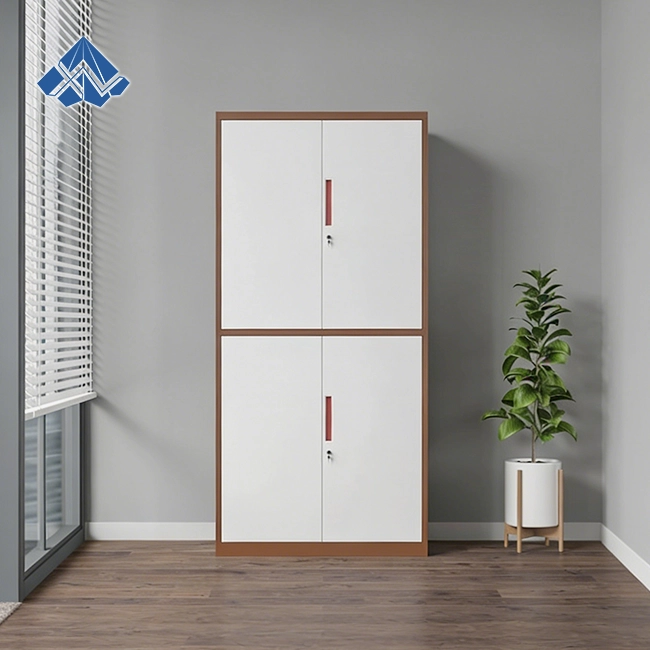
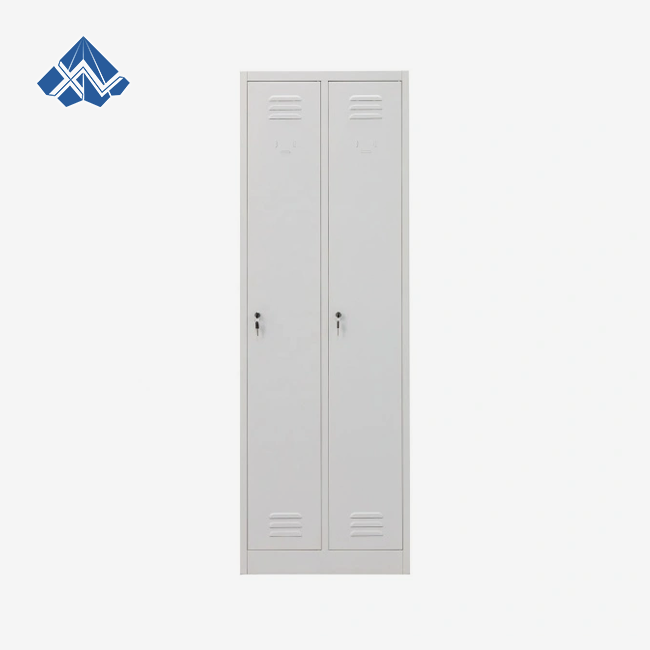
The landscape of industrial storage involves careful consideration of construction quality and design philosophy. Our manufactured single-column 2-door steel locker represents a vertically optimized solution measuring 1850×380×450mm, engineered to house two independent secure compartments within a minimal footprint. Constructed from cold-rolled carbon steel with 0.8mm thickness—substantially exceeding the industry standard 0.6mm—these units undergo nine pre-treatment stages, including acid pickling and phosphating, before receiving electrostatic epoxy-polyester powder coating.
Construction and Material Standards
The manufacturing process defines long-term performance. Cold-pressed and bent carbon steel forms the structural foundation, treated through high-temperature baking processes that embed moisture resistance and wear durability into every surface. Each vertical storage unit features ventilation louvers, preventing odor accumulation and moisture buildup, critical for maintaining contents in humid environments. The 60-80 micron protective coating withstands scratches, mild chemicals, and daily impact far better than thinner alternatives commonly found in budget products.
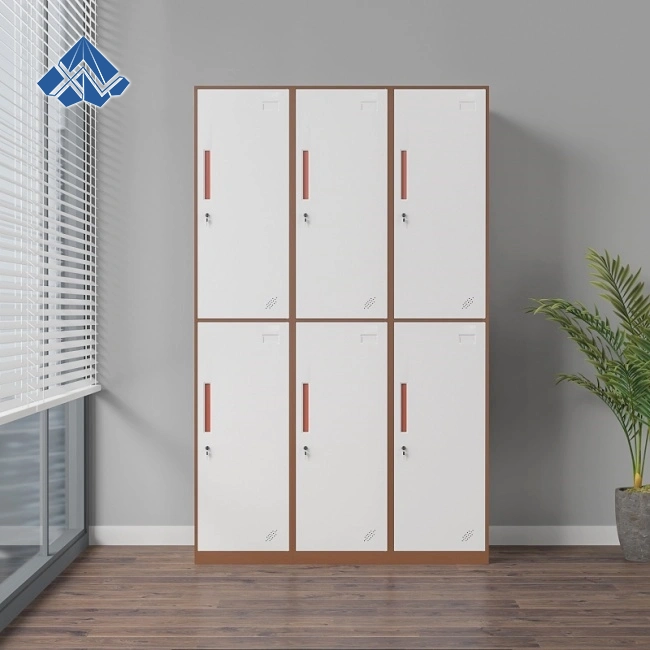
Multi-door configurations—spanning four-door, six-door, or higher compartment counts—prioritize user density over individual storage volume. These compact alternatives typically utilize thinner gauge steel to reduce per-unit costs, which directly impacts structural rigidity and lifespan. While suitable for high-turnover environments like fitness centers where users store minimal personal items temporarily, the compromised material thickness often necessitates earlier replacement cycles.
Dimensional and Capacity Differences
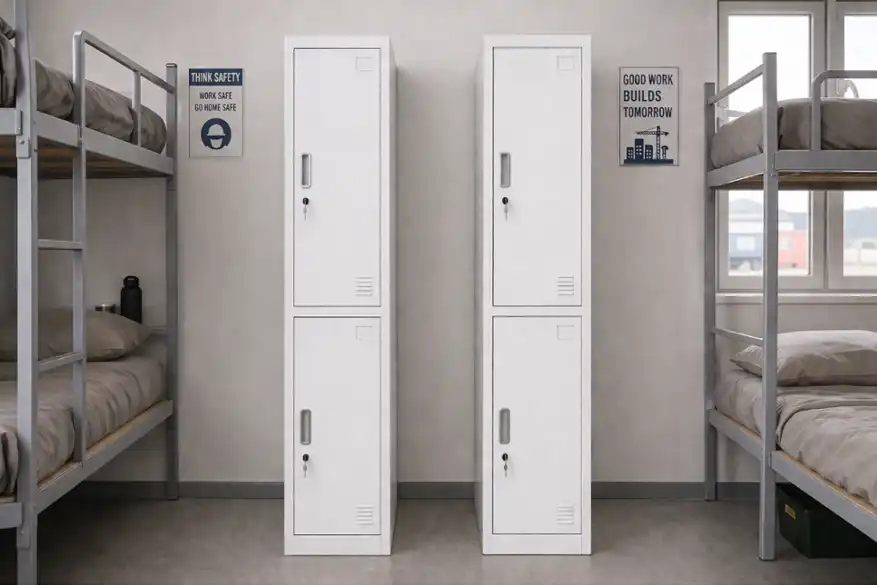
Space planning requires understanding how dimensions translate to practical utility. A two-door vertical locker occupies 0.17 square meters of floor space while providing two full-height compartments, each capable of accommodating hanging uniforms, backpacks, or document folders. This vertical efficiency allows facilities to serve two employees or students from different shifts within the same footprint, addressing the critical pain point of "storage density versus accessibility."
Conversely, multi-door units fragment the same vertical space into smaller cubbies. A six-door configuration dividing identical height into six compartments reduces each compartment to approximately 308mm in height—insufficient for hanging garments or storing larger equipment without folding or compression. This dimensional constraint limits application scenarios and user convenience.
Cost Factors in Choosing Between Single-Column 2-Door and Multi-Door Lockers
Budget decisions extend beyond purchase price tags. Strategic procurement teams analyze the total cost of ownership, encompassing acquisition, installation, maintenance, and replacement expenses across the expected service life.
Initial Purchase Price Analysis
Upfront costs reflect material investment and manufacturing complexity. The enhanced 0.8mm steel thickness in quality two-door vertical storage units increases raw material costs by approximately 25-30% compared to standard 0.6mm constructions. This material premium translates to purchase prices that may appear 15-20% higher per unit when compared superficially to multi-door alternatives.
Volume pricing structures significantly influence effective costs. Bulk procurement of single-column 2-door steel lockers typically qualifies for graduated discounts—our manufacturing facility offers tiered pricing, reducing per-unit costs by 12-18% on orders exceeding 100 units. Regional distributors and project contractors leveraging these economies effectively narrow the price gap against multi-door options while securing superior material quality.
Multi-door lockers present lower per-unit sticker prices but demand higher quantities to serve equivalent user populations. A 100-employee facility requires 50 two-door units or approximately 34 six-door units. When comparing total order values including shipping weight and installation labor, the cost differential often compresses to single-digit percentages.
Installation and Labor Considerations
Deployment complexity affects project timelines and labor budgets. Two-door vertical units typically ship as knock-down assemblies, reducing freight volume by 70% and enabling efficient container utilization. On-site assembly by facility maintenance teams requires basic tools and approximately 15-20 minutes per unit, minimizing contractor dependence.
Multi-door configurations present increased installation complexity due to more intricate door alignment requirements and smaller hardware components. Contractor quotes frequently reflect these challenges through higher per-unit labor rates. Our engineering teams consistently observe that installation costs for multi-door systems exceed two-door equivalents by 20-35% when normalized per user served.
Long-Term Durability and Maintenance
Lifespan projections directly impact annualized costs. The reinforced construction of quality two-compartment vertical lockers supports service lives exceeding 15-20 years in standard institutional environments. Thicker steel resists denting and deformation from impact, while robust powder coating maintains appearance and corrosion protection throughout extended use. Maintenance demands remain minimal—occasional hinge lubrication and lock mechanism inspection suffice for most installations.
Multi-door units constructed from thinner materials typically require replacement after 8-12 years due to accumulated door misalignment, hinge wear, and coating deterioration. Higher door counts multiply mechanical failure points, increasing maintenance call frequencies. These factors compound total ownership costs, often erasing initial purchase savings within the first decade of operation.
Functional and Space Efficiency Analysis
Operational effectiveness measures how well storage solutions serve daily user needs and facility management objectives. Beyond cost metrics, functional performance influences employee satisfaction, theft prevention, and space optimization.
Storage Capacity and User Experience
Compartment volume determines what users can reasonably store. Each chamber in a two-door vertical unit provides approximately 316 liters of storage volume—sufficient for winter coats, work boots, helmets, lunch containers, and personal bags simultaneously. This generous capacity eliminates the frustration of cramming belongings into undersized spaces, directly improving user satisfaction scores in facility surveys.
The vertical division creates natural organization opportunities. Factory workers separate clean personal clothing in the upper compartment from soiled work uniforms below, maintaining hygiene standards without requiring separate locker assignments. Healthcare facilities similarly benefit as staff isolate street clothes from scrubs, supporting infection control protocols.
Multi-door configurations restricting users to 50-80 liters per compartment force a compromise. Bags get folded, coats remain unprotected, and overflow items accumulate on floors or benches—creating safety hazards and maintenance burdens. User complaints regarding inadequate storage consistently rank among the top dissatisfaction drivers in high-density locker installations.
Footprint Optimization Strategies
Real estate costs demand efficient space utilization. The 380mm width of our manufactured two-door lockers allows row installations in corridors, against walls, or as room dividers without excessive space consumption. When arranged in double-sided rows, facilities achieve storage density of 10-12 users per square meter—competitive with multi-door alternatives while maintaining superior per-user capacity.
Strategic placement of a 2-door vertical steel employee locker capitalizes on vertical space. Standard 1850mm height fits beneath typical ceiling drops while maximizing wall utilization. Facilities with height restrictions exceeding 2000mm gain no additional advantage from multi-door units, making two-door configurations equally space-efficient without sacrificing compartment usability.
High-traffic environments like school locker banks benefit from the reduced door swing conflicts inherent to two-door designs. Fewer simultaneous door operations in a given area decrease congestion during shift changes or class transitions, improving flow and reducing damage from door collisions.
Customization and Adaptability
Operational flexibility supports evolving facility needs. Our OEM and ODM capabilities enable custom configurations—modified dimensions, integrated benches, specialized ventilation patterns, or reinforced structures for harsh environments. Two-door base designs accommodate these modifications more readily than complex multi-door frameworks, where structural alterations risk compromising door alignment across multiple smaller compartments.
Color customization according to RAL and Pantone charts supports wayfinding systems, departmental organization, or brand identity requirements. Project contractors serving educational institutions frequently specify color-coded locker banks differentiating grade levels or academic departments—a specification more economically implemented across fewer larger units than numerous small-compartment alternatives.
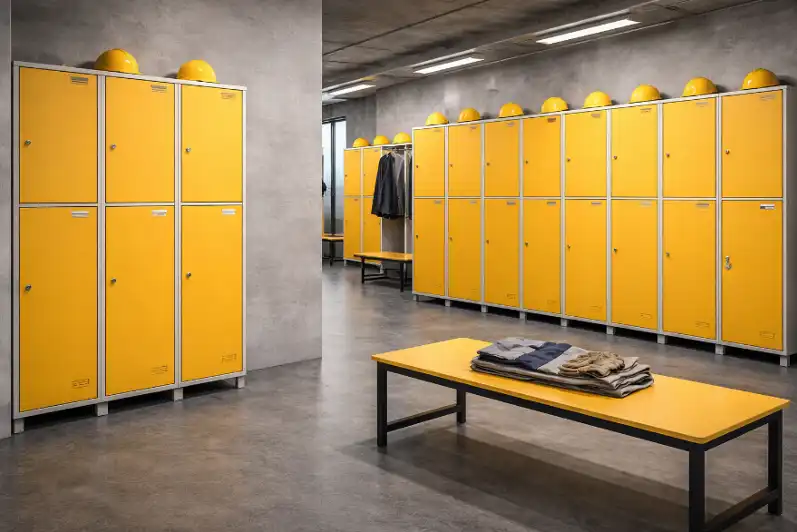
Security Features and Their Cost-Effectiveness
Asset protection ranks among the primary locker selection criteria. Institutional buyers, government facilities, and corporate environments demand reliable security mechanisms preventing unauthorized access and theft.
Locking Mechanism Options
Hardware selection balances security requirements against budget constraints. Standard cam locks provide baseline protection suitable for low-risk environments, operating through simple key mechanisms with master key override capabilities. Lock hasp preparations accommodate padlocks, transferring security responsibility to users who supply their own locking devices—common in educational and recreational facilities.
Digital lock integration represents the premium security tier. Electronic keypad or RFID card systems eliminate physical key management, enable access logging, and support remote administration. The larger door dimensions of two-door units accommodate electronic hardware installations more gracefully than cramped multi-door compartments, where space constraints complicate wiring and battery access.
Our manufactured units feature door stiffeners and reinforced strike plates resisting pry attempts. The 0.8mm steel construction withstands forced entry efforts that easily defeat thinner materials, providing tangible security advantages documented through insurance risk assessments.
Tamper Resistance and Structural Integrity
Physical security extends beyond locking hardware. Continuous hinge designs prevent pin removal—a common vulnerability in exposed hinge constructions. Recessed handles eliminate leverage points for crowbars or other tools. Ventilation louvers utilize punch patterns too small for reaching interior contents while maintaining airflow.
Multi-door configurations multiply potential failure points. Each additional door introduces hinges, latches, and alignment points where manufacturing tolerances accumulate. Our quality assurance data indicates that six-door units experience lock mechanism failures at 3.2 times the rate of two-door equivalents over identical service periods—directly impacting maintenance budgets and user frustration.
Security ROI Calculation
Quantifying security value requires assessing theft prevention against investment premiums. Facilities implementing robust two-compartment lockers with quality locks report 60-75% reductions in theft incidents compared to lightweight multi-door installations. When averaged across typical institutional replacement cycles, the superior security performance of reinforced two-door units delivers measurable cost avoidance through reduced stolen property claims and replacement expenses.
Procurement Considerations for B2B Clients
Strategic sourcing partnerships determine project success. Experienced buyers evaluate supplier capabilities, delivery reliability, and support infrastructure alongside product specifications.
Supplier Qualification Criteria
Manufacturing credibility for a 2-door vertical steel employee locker stems from verifiable certifications and operational maturity. Our facility maintains ISO 9001 Quality Management System certification, ISO 14001 Environmental Management System compliance, and GB/T 28001 Occupational Health and Safety Management accreditation. These internationally recognized standards provide procurement teams with audit-ready documentation supporting due diligence requirements.
Patent portfolios indicate innovation capacity. Our utility model patent for foldable lockers (Patent No.: ZL 2013 2 0243987.0) demonstrates ongoing engineering investment in storage solutions. The registered "Gangyicheng" trademark ensures brand consistency and legal recourse—critical considerations for institutional buyers requiring long-term parts availability and warranty enforcement.
Production capacity and supply chain stability prevent project delays. Over 20 years of operating in steel furniture manufacturing have established reliable raw material sourcing relationships and optimized production workflows. This operational maturity supports consistent 25-day delivery timelines from order confirmation through container loading—crucial for contractors managing tight construction schedules.
Customization and OEM Capabilities
Project differentiation demands flexible manufacturing. Our engineering teams collaborate with distributors, brand owners, and project contractors, developing custom specifications meeting unique application requirements. Dimension modifications, specialized coatings for corrosive environments, integrated accessory mounting points, or proprietary locking system installations proceed through documented change management processes, ensuring specification compliance.
Brand owners and e-commerce sellers pursuing private label products benefit from comprehensive OEM services. Custom embossing, exclusive color formulations, modified ventilation patterns, and proprietary accessory packages create market differentiation without requiring capital investment in manufacturing infrastructure. Minimum order quantities accommodate realistic market entry volumes while maintaining cost-effectiveness through efficient production batching.
Global Logistics and Delivery Assurance
International procurement introduces complexity beyond domestic sourcing. Our logistics partnerships encompass freight forwarding networks, customs documentation expertise, and container optimization experience accumulated across decades, serving North American, European, and Asia-Pacific markets. Regional distributors receive consolidated shipments, maximizing container cubic utilization and minimizing per-unit freight costs.
Delivery reliability stems from production planning discipline and buffer inventory management. Peak season demand fluctuations, raw material supply variations, and quality inspection protocols all receive consideration in our order confirmation timelines. This operational transparency enables contractors to integrate locker delivery schedules into critical path project planning with confidence.
After-Sales Support and Warranties
Post-delivery support differentiates manufacturers from mere suppliers. Technical teams provide installation guidance, troubleshooting assistance, and replacement parts coordination throughout product lifecycles. Warranty coverage extending across structural integrity, coating performance, and hardware functionality protects buyer investments against manufacturing defects.
Documentation packages accompanying shipments include assembly instructions, maintenance guidelines, and specification certifications supporting facility management handover requirements. These materials prove particularly valuable for institutional buyers where facility operators differ from procurement decision-makers, ensuring seamless operational transition.
Conclusion
Cost-effectiveness in locker procurement emerges from balancing immediate expenditures against sustained operational value. Quality single column 2-door steel lockers deliver superior total ownership returns through enhanced durability, reduced maintenance demands, greater user satisfaction, and improved security performance. While multi-door configurations offer lower entry prices, the compromises in material thickness, compartment usability, and service life typically erode those initial savings within early operational years. Strategic buyers serving demanding institutional, industrial, and commercial environments consistently recognize two-compartment vertical designs as the optimal intersection of investment protection and functional excellence.
FAQ
What thickness of steel should institutional buyers specify?
Commercial-grade applications demand a minimum 0.8mm cold-rolled steel before coating. Standard 0.6mm constructions lack the structural rigidity for high-use environments, showing deformation and coating failure within five to seven years. Our manufacturing specifications utilize 0.8mm material, providing 33% greater impact resistance and significantly extended service life.
How do delivery timelines affect project planning?
Standard production cycles require 25 days from order confirmation through container loading. Custom specifications may extend timelines by 7-10 days, depending on modification complexity. Contractors should incorporate these lead times into critical path schedules, accounting for international shipping durations and customs clearance processes when planning installation dates.
Can locker specifications meet sustainability requirements?
Modern manufacturing embraces environmental responsibility. Our ISO 14001-certified processes minimize emissions, promote material recycling, and utilize powder coating technologies, eliminating volatile organic compounds. Recyclable steel construction supports end-of-life material recovery, addressing ESG objectives for sustainability-focused institutional buyers. Documentation supporting green building certifications accompanies shipments when requested during procurement.
Partner with LY Unison for Your Steel Locker Solutions
Selecting the right single column 2-door steel locker supplier establishes the foundation for successful facility storage projects. LY Unison brings over 20 years of manufacturing expertise, ISO-certified quality systems, and comprehensive customization capabilities to every client relationship. Our 0.8mm reinforced steel construction, advanced powder coating processes, and flexible OEM services deliver the durability and performance that institutional buyers, project contractors, and regional distributors demand.
We understand procurement challenges—tight deadlines, complex specifications, and budget accountability. Our streamlined 25-day production cycles, transparent pricing structures, and dedicated technical support teams eliminate uncertainty from the sourcing process. Whether outfitting educational facilities, healthcare institutions, industrial warehouses, or corporate offices, our product range and customization flexibility ensure optimal storage solutions.
Contact our team at lysteelart@lysteelart.com to discuss your specific requirements. As a trusted single-column 2-door steel locker manufacturer, we provide detailed quotations, specification consultations, and sample arrangements supporting informed procurement decisions. Let our decades of industry experience and commitment to quality craftsmanship become your competitive advantage in delivering exceptional facility infrastructure.
References
1. Thompson, R. & Martinez, J. (2021). Total Cost of Ownership in Institutional Furniture Procurement. Journal of Facilities Management, 19(3), 234-251.
2. Industrial Storage Association. (2022). Steel Locker Construction Standards and Best Practices for Commercial Applications. Chicago: ISA Publishing.
3. Chen, L., Rodriguez, M., & Kim, S. (2020). Comparative Durability Analysis of Steel Storage Systems in High-Use Environments. Materials Performance Quarterly, 45(2), 112-128.
4. National Association of Educational Facilities. (2023). School Locker Specification Guide: Safety, Security, and Longevity Considerations. Alexandria: NAEF Press.
5. Patterson, K. (2021). Life Cycle Costing for Commercial Steel Furniture: A Procurement Professional's Guide. Facility Management Review, 37(4), 67-84.
6. Global Industrial Furniture Standards Committee. (2022). ISO-Compliant Manufacturing Processes for Metal Storage Solutions. Geneva: GIFSC Technical Publications.

CUSTOMER REVIEWS & GLOBAL PROJECT FEEDBACK
Trusted by Clients Worldwide for Quality Steel Furniture