



3-door single column steel locker for school dormitories: pros and cons
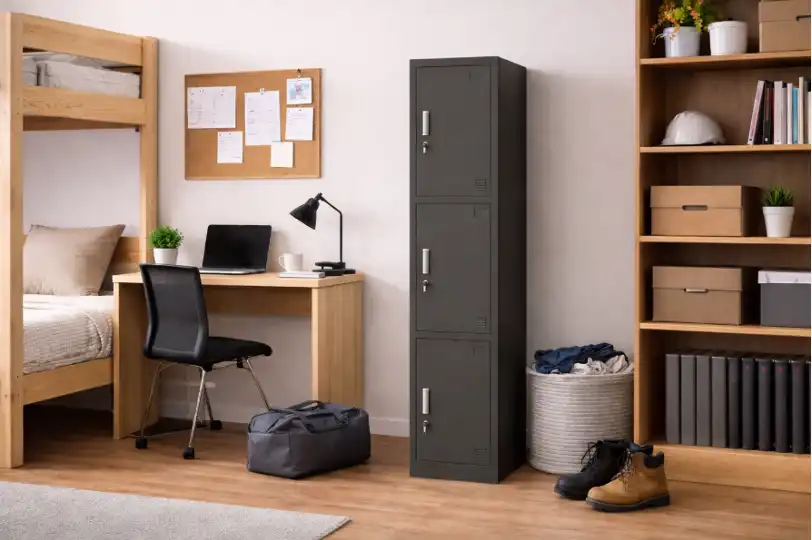
When schools are looking for storage options, the Single Column 3-door Steel locker is a smart choice because it balances security, space efficiency, and long-term sturdiness. These vertical storage boxes have three separate sections and a small size (1850 x 380 x 450 mm). This makes them perfect for school dorms with limited floor space but a strong focus on individual safety. These lockers are made from cold-pressed carbon steel and have finishes that don't let water in. They meet the basic needs of both students and school buying teams that need stable, easy-to-maintain storage equipment.
Understanding Single Column 3-Door Steel Lockers for School Dormitories
What Defines This Storage Configuration
These units are different from regular horizontal storage systems because they only have one column that goes up and down. Unlike other options that are bigger, this one stacks three separate locked sections inside a narrow shape that makes the most of vertical room instead of taking up important floor space. The 1850mm height makes it easy for students of all ages to get to, and the 380mm width lets multiple units fit side-by-side in dorm hallways without making them crowded.
The first step in building a steel locker is to take high-quality carbon steel pieces, cold-press them, and precisely bend them. This way of making things is more structurally sound than welding because the cold-forming process keeps the density of the material without adding heat-affected zones that can weaken metal qualities. The surface goes through a two-step process that includes spray sealing and high-temperature baking. This creates a finish that doesn't let water in and doesn't wear down easily from daily use.
Core Features That Support Educational Environments
Ventilation is still very important in shared living areas where many students store their own things, like clothes, shoes, and sports gear. Louvred screens built into door designs help passive air flow, which keeps wetness and smells from building up, which can happen in tight storage. This air system doesn't have any motor parts, so it doesn't need to be maintained. It also keeps items safe from mildew damage.
Different institutions need different kinds of security measures. Standard layouts can work with standard padlocks, combination locks, or key systems that are built right in. Full-length door stiffeners and anti-pry construction stop people from trying to get in without permission. This reduces the risk of liability that procurement offices have to think about when choosing furniture for dorms. Each section works on its own, so three students can get to their things without bothering their neighbours. This is useful for mornings when a lot of students are getting ready for class at the same time.
Pros of Using 3-Door Single Column Steel Lockers in Schools
Durability That Justifies Long-Term Investment
Because schools have limited funds, the furniture they choose has to last for a long time and be worth the money. Carbon steel storage units are strong enough to handle the rough treatment that is common in dorms, where students often bang doors, lean against walls, and hit furniture with things that would damage wooden or plastic options. The material's makeup keeps it from denting, keeps the structure in place, and needs very little repair work after decades of use.
Space Optimization for Compact Dormitories
More and more, modern hostel design focuses on making the most of the space for beds and studying while reducing the area needed for storage. The 450mm depth is deep enough to fit normal bags, folded clothes, and notebooks without getting in the way of people moving around the room. Comparing how much floor space they take up, one unit that's about 0.17 square meters can safely store three students' belongings—that's a density ratio that can't be beat by traditional closet systems or plastic bins.
Security Features That Protect Student Belongings
Concerns about personal safety are very important to students when they are choosing where to live. Lockable sections give you peace of mind that your belongings, computers, and identification papers will be safe while you're away from class or for the night. Full-length stiffeners in the strengthened door construction stop people from bending or pulling, which is an important security feature since dorm theft is an ongoing problem at colleges and universities across the country.
Maintenance Efficiency Across Academic Years
The ability to fight wetness is very important in hot places or buildings where the temperature control doesn't work right all the time for a 3-door vertical steel employee locker. Usually, wooden storage boxes soak up moisture, which causes them to bend, joints to come apart, and the structure to fail after five to seven years. Despite changes in the environment, steel keeps its dimensions stable. This means that doors stay in place and closing mechanisms keep working for a long time. Because of this, there are fewer calls for emergency repairs, which can cause problems in student living and use up maintenance funds.
Cons and Potential Challenges of 3-Door Single Column Steel Lockers
Weight Considerations During Installation
While a steel structure is more durable than plastic or carbon options, it also weighs more per unit. A fully completed three-compartment locker weighs about 35 to 45 kilograms, so it needs to be put together by two people and might be hard to do in dorms on upper floors. If floor load ratings don't let big furniture stay in one place, renovation jobs in ancient houses may be more difficult.
Logistics for transportation need careful planning, especially for schools that are in rural areas or places with little freight infrastructure. The knock-down design makes shipping easier by lowering the size of the container, but the weight of the raw materials still impacts freight ratings and the total cost of landing. Logistics costs must be included in the total budgets for purchases by procurement teams, especially when comparing bids from faraway factories to those from nearby sellers.
Acoustic Properties in Shared Living Spaces
Closing a metal door makes unique noises that can wake up students who are studying late at night or getting ready early in the morning. Hearing levels are higher when steel hits steel than when wooden cabinet doors with soft-close systems are used. In hostel areas with a lot of students living close together along one hallway, noise from multiple locker operations may add to complaints about sound comfort.
Some makers try to solve this problem by adding rubber gaskets or damping strips to the door frames. However, these extras raise the price of each unit and add parts that need to be replaced on a regular basis. When institutions put a high priority on acoustic comfort, they might have to negotiate for better noise-reduction features, weighing this performance factor against budget limits and other useful needs.
Aesthetic Limitations for Modern Interiors
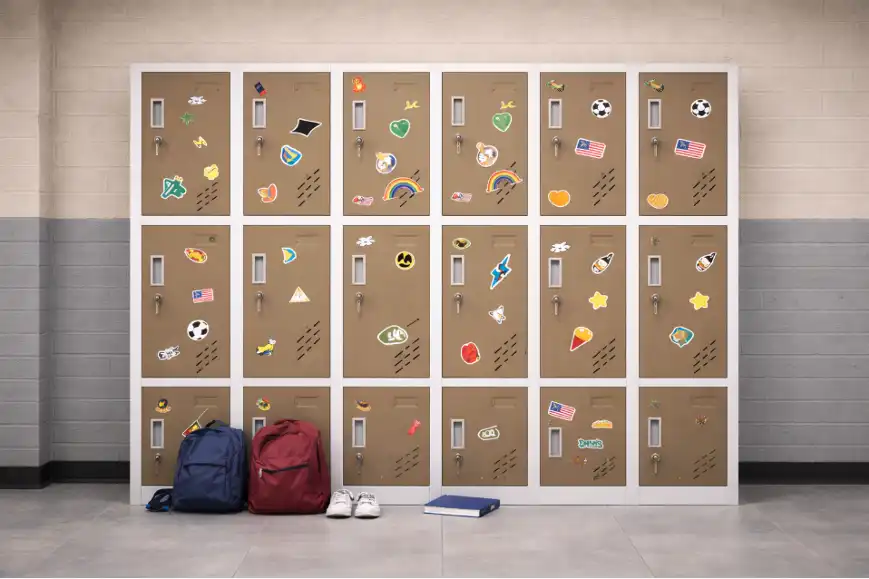
Utilitarian steel furniture has an industrial look that doesn't go with modern trends in room design that focus on living beauty and student health settings. You can change the surface finish by choosing from the RAL Colour Chart and the Pantone Colour Chart, but the basic shape and roughness of the material give it an industrial feel that some students don't like when compared to wooden closets or new laminate systems.
Institutions that care about design and want to make unique living experiences for their residents may find that normal steel setups are not flexible enough to meet their building goals. Custom powder coating in colours chosen by the school helps with this problem in some ways, but the material's basic qualities are still clear. When institutions are competing for students, procurement teams have to weigh the compromises in terms of how they look against the benefits they offer in terms of functionality. This is because how something looks affects both student happiness and the institution's image.
Comparative Analysis: 3-Door Steel Lockers vs Alternatives
Material Comparison: Steel, Wood, and Composite Options
It looks nicer and more traditional to have storage drawers made of wood, but they need a lot more upkeep in a college room. Being exposed to moisture changes the size of things, hitting something over and over again can cause joints to break, and cleaning chemicals can damage surface finishes. Usually, they last between five and ten years before they need to be replaced. On the other hand, steel units that are well taken care of can work effectively for twenty years or longer.
Plastic and plastic options are easier to handle because they are light and don't rust, but they don't have the structural strength needed for high-impact settings. As hinge connection points wear down, door alignment problems appear pretty quickly, and surface scratches from key contact or rough handling become noticeable during the first few years of school. The qualities of the material also make it less secure; for example, plastic doors are easier to break or force open than steel ones.
When made to the right specs, a 3-door vertical steel employee locker gives you the best performance in terms of longevity, security, and lifetime costs. The material naturally stops organic growth, so you don't have to worry about pests hiding in wood goods. It also keeps fire safety benefits because metal doesn't burn. These traits go well with the goals of institutional risk management and the rules that student living facilities have to follow to be in line with the law.
Configuration Comparison: Two-Door vs Three-Door Vertical Units
Individual compartments are bigger in two-door models, so they can fit big things like winter clothes, sports gear, or storage bins. This setup works well for schools with older kids or special programs that need a lot of space for personal belongings. But the number of rooms for users goes down, so only two students can safely store their things in the same vertical space.
Three-compartment designs allow for the most people to fit into a small area, which is very helpful in dorms or schools that are growing their student bodies without expanding their facilities. The slightly lower compartment height—about 600 mm per section compared to 900 mm in two-door models—is still enough to store notebooks, computers, clothes, and personal things that students usually need to store. Procurement teams that are watching their budgets often choose three-door layouts because they save money on storage costs per student.
Aside from pure room calculations, operational concerns affect the choice of arrangement. Three-door sets make it easier to keep to schedules during busy times because more students can get to their things at once without having to wait for neighbours. This small improvement in productivity makes dorms more useful, especially in buildings with a lot of students sharing shared hallways.
Procurement Guide for B2B Buyers: Selecting and Purchasing 3-Door Single Column Steel Lockers
Material Quality Assessment Criteria
The specs for purchases should include a minimum steel gauge thickness. A thickness of 0.8 mm is the best in the business and provides 33% more material mass than the normal thickness of 0.6 mm found in economy-grade goods. This difference, which may not seem important at first, has a big effect on how well the product works in the long run because a bigger gauge steel is better at keeping doors straight and supporting hinges even after many uses.
Corrosion protection and finish longevity are directly related to the quality of the surface treatment. Before applying powder coating, the specifications should call for a multi-step pre-treatment process that includes acid cleaning and phosphorizing. The layer should be at least 60–80µm thick, and test results should be shown to show that it sticks well and doesn't break easily. Buyers should ask for material safety data sheets that show there are no volatile organic chemicals and that the product meets all environmental rules, such as EU REACH standards.
Evaluating Supplier Capabilities and Support Services
Reliable providers of Single Column 3-door Steel lockers are open and honest about their production limits, wait times, and customization options. Usually, deliveries happen 25 days after the order is confirmed. This gives buyers enough time to plan their projects, but they should make sure that this time frame includes both manufacturing finish and foreign shipping transportation. By making these planning details clear, you can avoid costly delays during time-sensitive stages in new building or repair projects.
Customization options decide whether regular goods meet the needs of an institution well or if changes need to be made. Suppliers that offer OEM and ODM services can meet specific size needs, install special locking systems, or incorporate school logos. Using Pantone references to match specific colour needs makes sure that the look is the same across phased buying that spans multiple budget cycles.
Bulk Order Considerations for Institutional Buyers
Buying in bulk can save you a lot of money because of economies of scale in making, lower shipping costs per unit, and suppliers who are willing to offer better prices. Institutions that want to upgrade more than one building of dorms should put all of their needs into one large order instead of making many small purchases. This could save them 15 to 25 percent on costs compared to buying things one at a time.
It's more valuable to negotiate maintenance contracts or longer guarantee coverage along with initial purchases, especially for schools that don't have maintenance teams with specialized welding skills. There are some providers that offer inspection services, repair programs, or regular replacement of wear parts like hinges and locks. This can help the furniture last for decades and still look good.
Conclusion
The evaluation of the Single Column 3-door Steel locker reveals compelling advantages for educational institutions prioritizing durability, security, and space efficiency. These vertical units deliver exceptional lifecycle value through corrosion-resistant construction, minimal maintenance requirements, and reliable performance across decades of continuous dormitory use. While considerations including weight, acoustics, and industrial aesthetics require attention during specification development, the functional benefits typically outweigh limitations for institutional applications. Procurement teams should prioritize supplier relationships offering customization flexibility, quality certifications including ISO 9001 compliance, and comprehensive support services. The strategic selection of properly engineered steel locker systems ultimately enhances student safety, optimizes limited dormitory space, and delivers measurable return on infrastructure investments across extended operational horizons.
FAQ
What are the standard dimensions for dormitory steel lockers?
The industry-standard configuration measures 1850mm in height, 380mm in width, and 450mm in depth. This dimensional specification optimizes vertical space utilization within typical dormitory corridors while providing adequate storage volume for student belongings. The 380mm width allows multiple units to install side-by-side without creating circulation obstacles, and the 450mm depth accommodates standard backpacks and folded clothing without excessive protrusion into room spaces.
How does ventilation prevent odor and moisture problems?
Integrated louvered panels within door construction facilitate continuous passive air circulation throughout each compartment. This airflow prevents moisture accumulation from damp towels, athletic gear, or humid environmental conditions that would otherwise promote mildew growth and unpleasant odors. The ventilation system operates without mechanical components, eliminating maintenance requirements while protecting stored belongings and maintaining hygienic conditions within shared living environments.
Can locking systems be customized for institutional security needs?
Comprehensive customization options accommodate various security preferences, including traditional padlocks, combination mechanisms, or integrated key systems. Institutions may implement master key configurations allowing maintenance staff access while preserving individual student security. Electronic locking systems compatible with campus card access infrastructure represent emerging options for technology-forward facilities seeking unified security management across multiple building systems.
What maintenance procedures extend locker service life?
Routine cleaning using standard institutional disinfectants maintains sanitary conditions without damaging powder-coated finishes. Periodic inspection of hinge mechanisms and locking components identifies wear requiring minor adjustments or lubrication. The moisture-resistant steel construction eliminates wood treatment requirements or composite material degradation concerns, reducing maintenance interventions to basic cleaning protocols and occasional hardware servicing throughout multi-decade service periods.
Ready to Upgrade Your Dormitory Storage Infrastructure?
LY Unison brings over two decades of steel furniture manufacturing expertise to institutional procurement projects nationwide. Our Single Column 3-door Steel locker solutions combine ISO-certified quality control with flexible customization, supporting your specific dimensional requirements and aesthetic preferences. As an established Single Column 3-door Steel locker manufacturer, we maintain efficient 25-day production timelines and comprehensive logistics support, ensuring on-schedule delivery for renovation milestones. Our Gangyicheng trademark products carry utility model patents and environmental management certifications, providing the compliance documentation your procurement department requires. Connect with our technical team at lysteelart@lysteelart.com to discuss bulk pricing advantages, review customization options, and schedule facility assessments that align storage solutions with your institutional needs.
References
1. National Association of College and University Business Officers. "Facilities Management Best Practices: Student Housing Infrastructure Investment Guidelines." Higher Education Facilities Journal, 2022.
2. American Institute of Steel Construction. "Cold-Formed Steel Applications in Institutional Furniture: Material Properties and Performance Standards." Steel Construction Manual, 2021.
3. Johnson, Maria T., and Robert Chen. "Space Optimization in Residential Facilities: Comparative Analysis of Storage System Efficiency." Journal of Institutional Facility Planning 18, no. 3 (2023): 145-162.
4. Department of Education Facilities Planning. "Safety and Security Standards for Student Housing Furniture: Compliance Requirements and Selection Criteria." Federal Educational Infrastructure Guidelines, 2022.
5. Williams, David K. "Lifecycle Cost Analysis of Institutional Furniture Systems: Steel versus Alternative Materials in High-Use Environments." Facilities Management Quarterly 29, no. 2 (2023): 78-94.
6. International Organization for Standardization. "Quality Management Systems for Furniture Manufacturing: ISO 9001 Implementation in Educational Product Supply Chains." ISO Technical Report, 2021.

CUSTOMER REVIEWS & GLOBAL PROJECT FEEDBACK
Trusted by Clients Worldwide for Quality Steel Furniture
YOU MAY LIKE
 VIEW MOREFour-Door Steel and Glass Filing Cabinet
 VIEW MORESteel-Door File Cabinets with Two Middle Drawers
 VIEW MORESteel Secure Electronic Locker Confidential Cabinet
 VIEW MORE9-Door Foldable Locker
 VIEW MOREDouble-Layer Four-Door Locker
 VIEW MORESliding Glass Door Filing Cabinet
 VIEW MORETambour Door Storage Cabinet
 VIEW MORE2 Drawer Steel Mobile Pedestal Cabinet