


Best 1-door steel locker for gym and workplace use
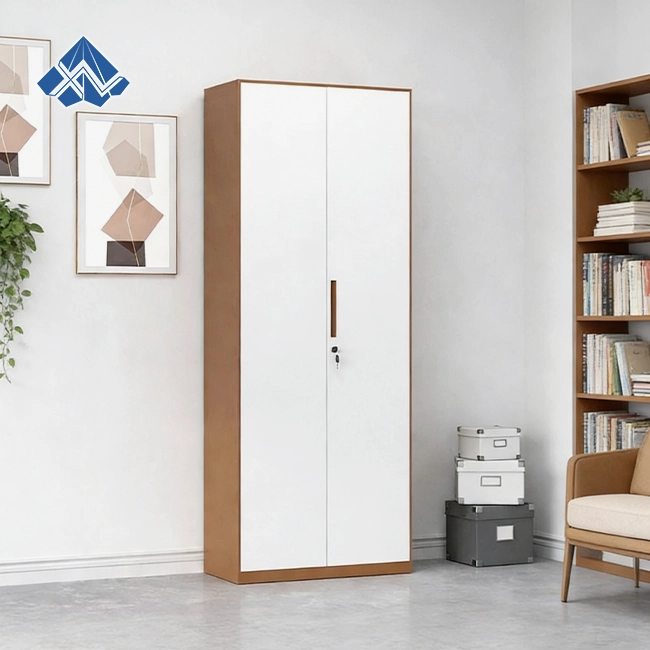
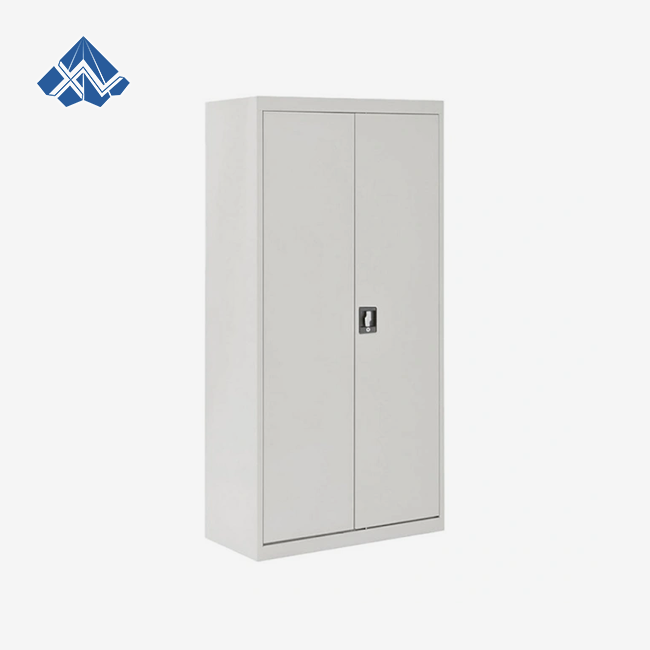
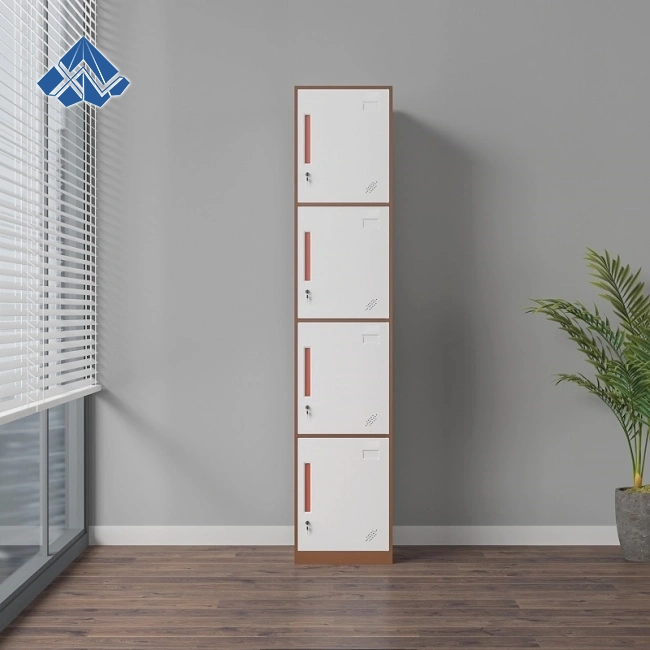
When looking for safe and reliable storage options for places with a lot of foot traffic, the Single Column 1-Door Steel Locker is the clear winner. This vertical storage unit can hold a lot of things on hangers while taking up very little floor space. It's perfect for gyms, factories, schools, and corporate offices. These lockers are made from high-quality carbon steel and have advanced surface treatments that make them last a long time. They can also hold full-length clothes without having to fold them up. Their modular design makes it easy for facilities to change the way storage is set up, which meets the growing need for safe personal storage in a wide range of business settings.
Understanding Single Column 1-Door Steel Lockers
It's always hard for modern buildings to provide enough personal storage without giving up valuable floor space. Smart vertical design in Single Column 1-Door Steel Locker units solves this issue. Traditional multi-tier units make users bend or stoop to get to their things. These full-height lockers, on the other hand, make it easier to access belongings while still taking up only 380 mm of space.
The way these storage units are put together is the result of decades of improving manufacturing processes. Precision bending and shaping of cold-rolled carbon steel result in panels with excellent structural integrity. What really sets high-quality Single Column 1-Door Steel Locker units apart is the surface preparation protocol, which includes pickling, phosphating, and electrostatic powder coating. This creates a finish that is resistant to water and wear, capable of withstanding daily use in demanding environments.
Core Applications Across Industries
The owners of gyms and fitness centres like these lockers because they can hold athletic bags, shoes, and full-length workout clothes. The ventilation design keeps smells from building up, which is very important when storing wet clothes and towels. They are used in factories to keep dirty work clothes separate from personal items. This follows hygiene rules and lowers the risk of cross-contamination.
Healthcare facilities use steel storage cabinets with one door for staff changing areas, where scrubs and other protective gear need their own space. The powder-coated surface is smooth and can be cleaned with hospital-grade disinfectants. This makes cleaning up between shifts easier. In high-traffic locker rooms at schools, where traditional wooden units break down quickly from constant use, they last longer and are more cost-effective.
Material Excellence and Construction Standards
After a while of use, the difference between cheap metal storage and professional-grade metal storage becomes clear. The industry standard for steel thickness is 0.6 mm, but better manufacturers use 0.8 mm cold-rolled steel, which is 33% thicker and much more resistant to dents. It also stops the "oil-canning" effect that causes unsightly surface warping. With this thicker gauge steel, the structure stays strong even when equipment carts or dropped sports gear hit it.
In damp places, the quality of the surface treatment determines how long something will last. First, chemical etching is used to get rid of mill scale and other impurities. Then, a zinc phosphate conversion coating is applied to help the coating stick. The final epoxy-polyester powder coating is cured at high temperatures, which forms a chemically bonded finish that is much more resistant to scratches, chips, and corrosion than liquid paints.
Dimensions and Functional Design Considerations
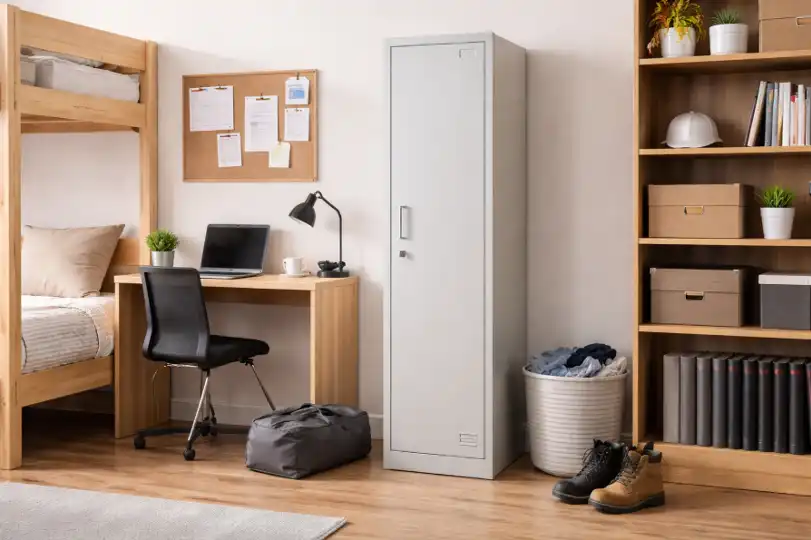
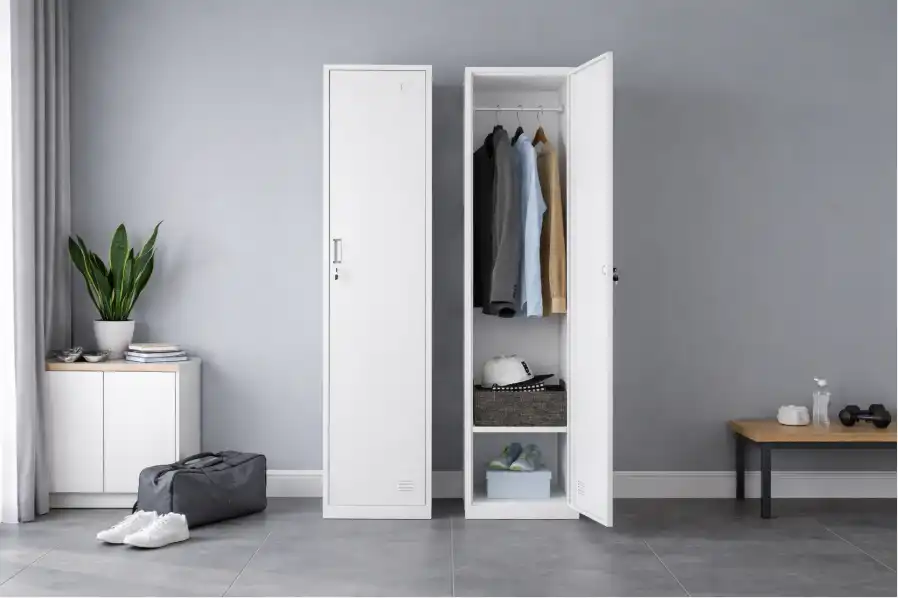
Optimal locker dimensions for Single Column 1-Door Steel Locker balance storage capacity with space efficiency, and the 1850×380×450mm specification represents the industry standard for full-height personal storage. This configuration provides 1800mm of usable internal height—sufficient for hanging laboratory coats, winter jackets, or coveralls on the integrated clothes rod without floor contact. The 450mm depth accommodates helmet storage on the upper shelf while leaving room for boots or bags on the base.
Ventilation Systems and Hygiene Features
Managing airflow separates useful storage from problematic moisture traps. Good single-column lockers have louvred vents at the top and bottom of the door sections. These create convective circulation, which gets rid of humid air. Some more advanced styles have diamond-pattern perforated doors that let more air in by over 40% more than regular louvres. This is especially helpful in changing rooms for swimming pools or industrial laundromats where moisture levels stay high.
A fixed upper shelf for small valuables and headgear is usually located about 300 mm from the top of the inside configuration. The width below is made up of a heavy-duty chrome-plated clothes rod that is made to hold 20 kg or more without sagging. This feature is very useful in places where workers need to hang a lot of clothes or equipment harnesses.
Security Mechanisms and Access Control
Lock compatibility is an important thing to think about when buying something because different places need different levels of security. As standard, an 18x18mm cam lock cutout that works with traditional key systems is included in the preparation. People who buy in bulk often ask for padlock hasps for places where people prefer personal locks. On the other hand, corporate offices are increasingly using four-digit mechanical combination locks that get rid of the hassle of managing keys.
Electronic RFID locking systems are the best choice because they can be connected to facility access control platforms to keep track of how they are used and only let authorized people in. Healthcare facilities that store controlled substances or manufacturing plants that keep track of how tools are checked out will like these systems. Double-thick steel is used in the door's reinforcement around the lock areas to stop attempts to break in.
Comparing Single Column 1-Door Steel Lockers with Other Locker Types
When purchasing managers look at storage solutions, they see a lot of different materials and configuration choices, each with its own pros and cons. A Single Column 1-Door Steel Locker is often considered for its durability and practicality. Wooden lockers look nice, but they soak up water, keep bacteria in the grain structures, and break when they get hit. Their yearly upkeep needs, like refinishing, replacing hinges, and fixing structural problems, add up to costs that are higher than steel alternatives within three years of installation.
Plastic polymer lockers say they won't rust, but when they're put under stress, their structural flaws become clear. Because the material isn't very stiff, doors bend when temperatures change or when they are hit hard. Ultraviolet light breaks down polymer chains, which makes them brittle and eventually cracks them. Even though they work for outdoor pools during certain times of the year, they don't have the professional look or safety features that are needed in business or industrial settings.
Single-Door Versus Multi-Tier Configurations
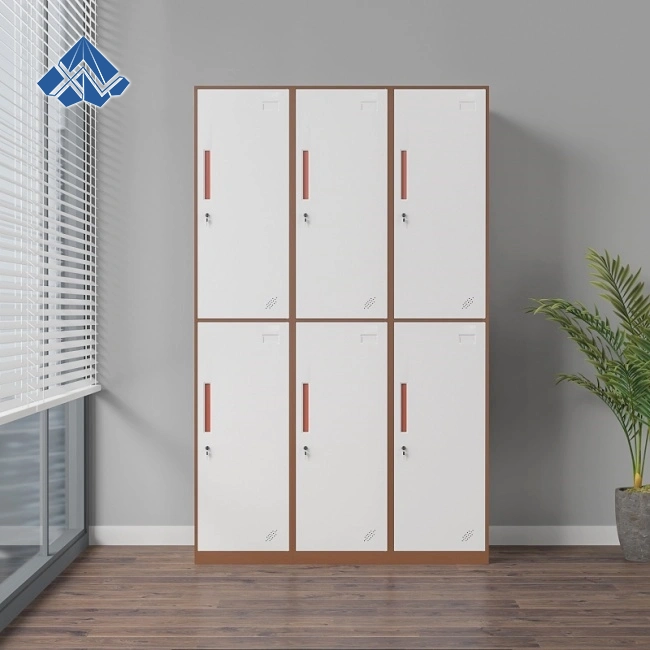
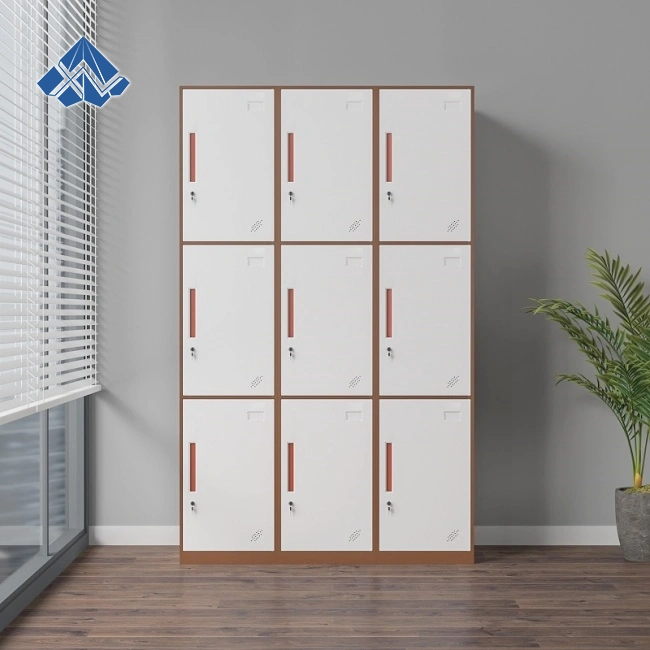
Multi-tier lockers are useful for short-term storage of small items because they have two to six compartments on the same floor space. But because each compartment is 300–400 mm high on the inside, users have to fold clothes, which makes uniforms and dress clothes wrinkled. Because of this, they can't be used in places where long-term storage of specialized workwear like lab coats, welding aprons, or safety gear is needed.
It's impossible to say enough about how much privacy single-door units offer. Each user gets their own space that can't be seen by other people, so they can store valuable items without worrying about security. Multi-tier designs with stacked compartments make it harder for shorter people to get to the upper units and for people with mobility issues to get to the lower sections.
Heavy-Duty Steel Specifications for Demanding Environments
By telling the difference between light-duty and industrial-grade metal storage, you can avoid costly mistakes that happen when product capabilities don't match up with operational needs. Standard hinges and 0.6 mm steel are enough for school gyms that serve high school students. On the other hand, factory changing rooms that have three shifts of workers every day need 0.8 to 1 mm steel with continuous welded hinges that can open and close more than 50,000 times without breaking.
Forklifts and moving equipment can make loading docks and warehouse break rooms even more difficult to use for a Single Column 1-Door Steel Locker. The units made for these areas have strong base channels that keep the lockers from falling over when pallet jacks hit them, and anti-tip brackets that hold the locker banks to the walls. These safety features protect both the storage space and the people who work in crowded areas.
Procurement and Supplier Selection Guide
Identifying reliable steel storage suppliers requires evaluating capabilities beyond published product specifications. Bulk procurement scenarios—outfitting a new facility wing or replacing aging infrastructure—demand partners capable of consistent quality across hundreds of units delivered according to project timelines. The supplier evaluation process should examine manufacturing capacity, customization flexibility, and post-sale support infrastructure.
Manufacturing Credentials and Quality Certifications
ISO 9001 certification means that quality management systems have been in place for a while, but it doesn't guarantee that the Single Column 1-Door Steel Locker is excellent by itself. Smart buyers ask for factory audit reports that list the capabilities of the production line, the rules for getting raw materials, and the steps for testing finished goods. Manufacturers who keep their own testing facilities for load-bearing verification, coating adhesion measurement, and salt spray corrosion testing show that they care about their products' performance above and beyond what is required by law.
Customization Capabilities and Lead Time Management
Standard catalogue items rarely perfectly match the needs of a specific facility. Professional suppliers offer ODM and OEM services that let you make your own designs. For example, they can make non-standard sizes for basements with low ceilings, match colours to corporate brand guidelines using RAL or Pantone systems, and add logos by screen printing or laser engraving. Being able to change the internal arrangements—by adding more shelves, USB charging ports, or specialty hooks, for example—makes generic storage solutions more useful.
Logistics Support and Installation Services
International shipping adds more complexity than buying something in your own country, especially for knock-down designs that need to be put together by a professional. Exporters who have been in business for a while keep in touch with freight forwarders who know how to optimize containerization, prepare paperwork, and handle customs clearance procedures. Their experience helps them meet the rules in different areas, which keeps shipments from being held up because of wrong classification or missing paperwork.

Maintenance and Longevity for Steel Lockers
Initial procurement costs represent only a fraction of total ownership expenses over a locker bank's 15-20 year service life. Maintenance protocols directly impact longevity, with proper care preserving both functionality and appearance, while neglect accelerates deterioration, requiring premature replacement. Understanding appropriate cleaning methods, inspection schedules, and repair procedures maximizes return on storage infrastructure investments.
Cleaning Protocols and Surface Care
When cleaning once a day or once a week, you should use pH-neutral detergents that have been diluted according to the manufacturer's instructions and soft microfiber cloths that won't scratch powder-coated surfaces. Harsh alkaline cleaners or rough scouring pads remove protective coatings, leaving the steel underneath exposed to water and starting corrosion. Chlorine-based disinfectants work well to kill germs, but they need to be rinsed off well so that the coating doesn't break down from being exposed to the chemicals for too long.
When it comes to maintenance for a Single Column 1-Door Steel Locker, places with a lot of humidity need extra care. Ventilation louvres should be checked every three months to see if they are blocked by dust or paper debris. Not enough airflow leads to condensation, which makes internal surfaces more likely to rust. Using automotive-grade wax every six months on the outside of buildings in coastal areas or places with high atmospheric salinity is good for them because it adds another layer of protection against moisture.
Lock Maintenance and Security System Inspection
Every six months, graphite powder or silicone-based sprays should be used to grease mechanical lock parts of the 1-door vertical steel storage locker. Never use petroleum products, which attract dust and gum up mechanisms. Combination locks work better when the code is changed every so often. This keeps former employees and facility users from getting in without permission. Electronic systems usually need new batteries every year, and backup power systems should be tested every three months to make sure they don't lock out when the power goes out.
When hinge assemblies on the 1-door vertical steel storage locker are opened and closed thousands of times, they are put under a lot of stress. Good, continuous welded hinges don't break often, but they should be checked every so often to make sure they are securely attached to the door and frame panels. Loose fasteners need to be fixed right away, before stress builds up and causes cracks to form in the mounting holes. Damaged doors with frame distortion from impacts need to be looked at by a professional. Trying to fix them yourself often makes things worse, but factory replacement doors restore the original look and security.
Damage Response and Repair Economics
Touch-up paint pens that match the colour of the surface can be bought from responsible manufacturers and used to fix small scratches. These fixes stop water from getting in, which makes damage worse over time. When panels are dented, things get more complicated. Light dents are still just a cosmetic issue, but major deformation can throw off the locking mechanism's alignment, which means the panel needs to be replaced.
The repair-versus-replace decision calculus looks at the age of the unit, the amount of damage, and how much it would cost to replace it. Replacing individual lockers within banks of identical units keeps the look consistent, while mixing old and new designs makes things look less professional. Facilities that keep detailed records on their asset management and maintenance costs per unit can find lockers that aren't working right and are using up too much of their repair budgets. This means that they should be replaced before they break down completely and stop operations.
Conclusion
When choosing the right personal storage solutions, you have to weigh your short-term budget against your long-term operational costs and the way the facility looks. A 1-door vertical steel storage locker is the most durable, secure, and space-efficient locker on the market. It is perfect for gyms, factories, and schools. Its small 1850×380×450 mm size fits full-length clothes while taking up very little floor space, and advanced surface treatments make sure it will last for decades. When you buy something from a good manufacturer with certified quality systems, responsive technical support, and full customization options, you can turn it into a strategic facility investment. Following the right maintenance procedures will keep both the functionality and the appearance of storage infrastructure in good shape, allowing organizations to meet their operational needs and professional standards.
FAQ
What distinguishes knock-down from fully welded metal storage units?
Knock-down designs ship flat-packed, reducing container volume by approximately 70% and lowering freight costs substantially. Assembly requires basic tools and typically completes within 15 minutes per unit following instructional videos. Fully welded units arrive ready for installation but incur higher shipping expenses, making them cost-effective only for small orders or specialized applications.
Can steel lockers withstand pool and spa changing room conditions?
Standard powder-coated steel performs adequately in damp environments with proper ventilation. However, direct water exposure from pool splash-out or steam room proximity requires upgraded corrosion protection through pre-galvanization or stainless steel construction. Units passing 96-hour salt spray testing demonstrate suitability for high-humidity applications without premature rust formation.
How do electronic locks compare with mechanical alternatives?
Electronic RFID systems eliminate key management overhead while enabling access tracking and remote administration. Battery-powered models require annual maintenance, and system failures create temporary lockout risks absent backup mechanical overrides. Mechanical combination locks offer reliability without power dependencies, but lack usage monitoring capabilities valuable for audit trails.
Partner With LY Unison for Your Storage Infrastructure Needs
LY Unison brings over two decades of steel furniture manufacturing expertise to every procurement relationship, supporting bulk distributors, project contractors, and institutional buyers with comprehensive solutions. Our Single Column 1-Door Steel Locker product line combines patent-protected designs with ISO-certified quality control, delivering durable storage that meets demanding operational requirements across industries. The Gangyicheng trademark represents manufacturing excellence backed by ISO 9001, ISO 14001, and GB/T 28001 certifications, assuring consistent product quality and responsible production practices.
We understand the project complexities facing engineering firms and contractors working under compressed timelines. Our 25-day delivery commitment for custom orders, combined with flexible OEM/ODM services supporting brand differentiation, streamlines procurement workflows. Reach our technical team at lysteelart@lysteelart.com to discuss your facility storage requirements, request detailed specifications, or arrange factory visits to our Luoyang production facility. As an established Single Column 1-Door Steel Locker manufacturer, we maintain inventory supporting immediate fulfillment for standard configurations while offering customization to match your exact operational needs.

References
1. American Society for Testing and Materials. (2019). ASTM D4060: Standard Test Method for Abrasion Resistance of Organic Coatings. ASTM International Standards.
2. Business and Institutional Furniture Manufacturers Association. (2021). ANSI/BIFMA X5.9: Storage Units - Tests for Safety and Performance. BIFMA Standards Publication.
3. Chen, W., & Rodriguez, M. (2020). Corrosion Protection in Steel Furniture Manufacturing: Surface Treatment Technologies. Journal of Industrial Coating Technology, 42(3), 187-203.
4. International Organization for Standardization. (2018). ISO 9001:2015 Quality Management Systems - Requirements and Implementation Guidelines. ISO Standards Catalogue.
5. National Association of Architectural Metal Manufacturers. (2022). Metal Locker Design and Specification Guide for Commercial Applications. NAAMM Technical Publication.
6. Peterson, L., & Kumar, S. (2021). Facility Storage Solutions: Comparative Analysis of Material Performance in High-Traffic Environments. Facilities Management Quarterly, 38(2), 67-84.

CUSTOMER REVIEWS & GLOBAL PROJECT FEEDBACK
Trusted by Clients Worldwide for Quality Steel Furniture