


Metal bed vs wooden bed: which is better?
Comparing metal frames to wooden ones for educational and business use, metal beds are the better choice in terms of durability, cleanliness, and overall value over time. A Small single metal bed, especially one made of carbon steel, meets important buying goals like being resistant to fire, keeping pests away, and being easy to maintain. These frames work better than wood in places with a lot of movement, like dorms, hospitals, and hotels, where cleanliness rules and structural stability are very important. The total cost of ownership is lower for things made of metal because they last longer, don't get damaged by water, and are easier to clean, so they meet strict health and safety standards.
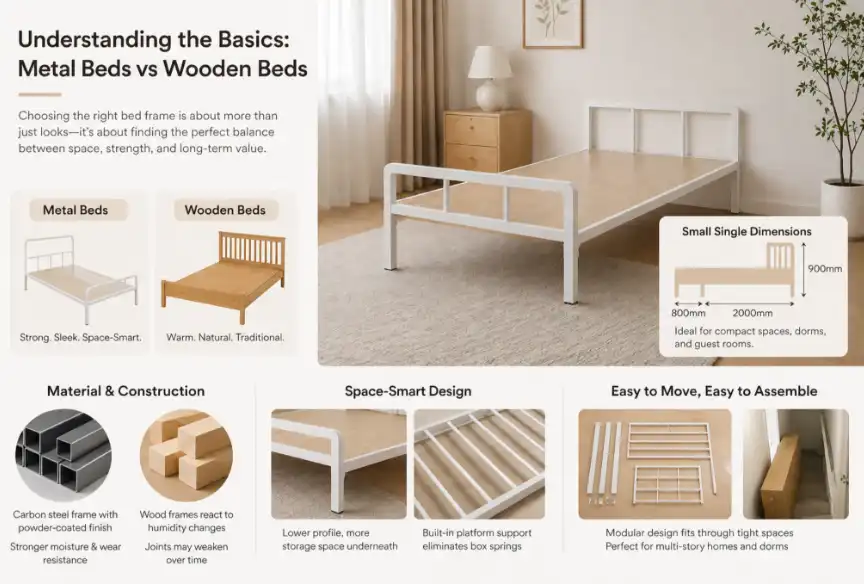
Understanding the Basics: Metal Beds vs Wooden Beds
Standard Dimensions and Space Considerations
The Small single metal bed usually has measurements of 800 mm wide, 2000 mm long, and 900 mm high. It is intended to fit into small rooms in homes and businesses. This size range is in the middle of the regular twin and narrow single options, so it makes the best use of floor space in small beds and dorms. Wooden beds of similar sizes have similar footprints, but the total size can be changed by 50 to 100 mm, depending on the width of the posts and any extras that are added.
Material Characteristics and Construction Methods
Carbon steel is the main material used to make metal bed frames. It is shaped by cold pressing and bending, which results in exact angles and consistent sizes. As part of the production process, flat or tubular steel pieces are welded together to make stiff frames. The surfaces are then protected with a high-temperature spray coating. The moisture resistance and wear resistance of this powder finishing process are better than those of regular paint finishes. Joinery methods like mortise-and-tenon joints, dowel strengthening, or metal bracket assembly are used to build wooden beds. Pine, oak, and synthetic wood goods like medium-density fiberboard are all common types of wood. Because wood naturally absorbs and releases water, these frames react to changes in humidity, which can weaken the joints over time in places with changing weather.
Design Considerations for Space-Restricted Environments
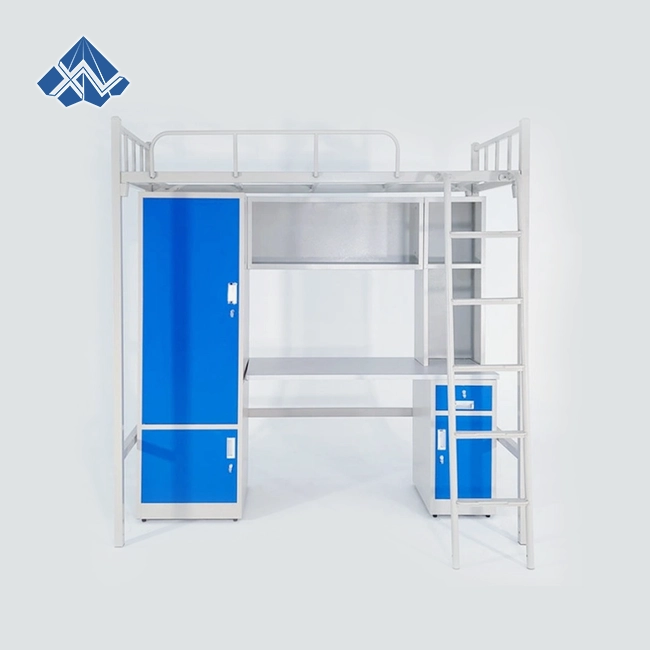
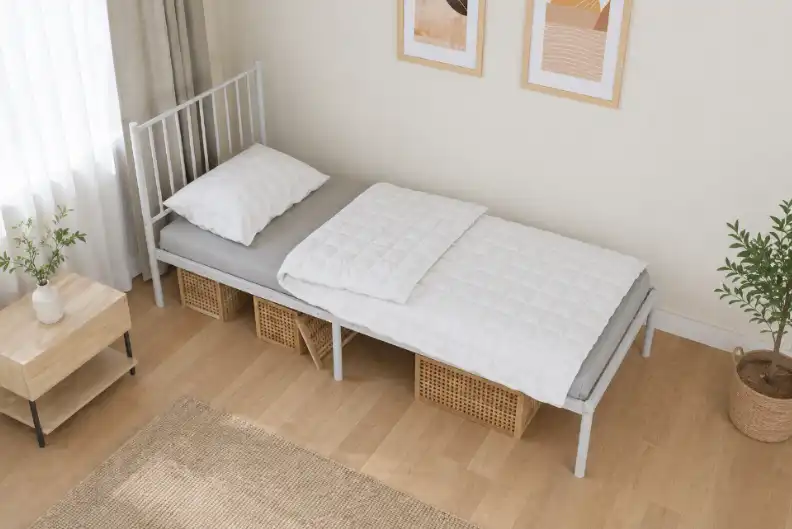
Modern metal beds have platform-style support systems with built-in bars or mesh panels. This gets rid of the need for separate box springs and lowers the overall height of the bed. This method makes the most of the space under the bed for storage while still supporting normal pillows. Because the rails are made of steel tubes instead of solid wood, the profile rails can be smaller, which gives you more room in tight spaces. Logistics can be done efficiently through narrow hallways and stairwells with modular assembly systems. This is especially important for multi-story educational buildings.
Key Comparison Factors for Procurement Decisions
Durability and Maintenance Requirements
In business settings, the expected service life for metal frames versus wooden frames is very different. If you protect steel from rust the right way, it can be used continuously for 15 to 20 years in an academic setting. On the other hand, wooden frames usually need to be replaced every 8 to 12 years because the joints get loose and the surface gets damaged. Small single metal bed. Metal frames made from 0.8 mm steel are thicker than what is required by industry standards. This makes them more resistant to damage from bumps that happen when things are moved and repositioned a lot. Standard disinfectants are used to clean metal beds as part of their maintenance schedules. This helps with infection control in healthcare and leisure settings. The surface doesn't have pores, so it doesn't soak up liquids or hold allergens or germs. Wooden frames need to have their fasteners tightened on a regular basis, their scratches fixed, and the right cleaning products chosen so that water doesn't damage the finish or make it flake. When handling big inventories across various sites, the difference in maintenance costs becomes important.
Space Optimization and Aesthetic Versatility
Metal frames make rooms look bigger because they have simple shapes and are built in a way that lets light and air flow through. Customizing colors based on RAL and Pantone color charts makes it easy to match them to current interior design styles without having to worry about inventory. You can choose from neutral colors for standard school settings to bright colors for places geared toward young people. Wooden beds are naturally warm and have a classic look that makes them appealing for both home and hotel settings. The natural grain designs make the wood look interesting, but you can only change the color to something in the wood's native range. The solid look can make rooms feel more full, but it may make rooms that are already small look even smaller.
Functional Features and Mattress Compatibility
In modern metal bed designs, normal cushion sizes are accommodated, and headboard and footboard styles can be chosen separately. The platform design means that memory foam, innerspring, and combination cushion types can all be used without any extra support systems. Some models have storage drawers or systems that allow the frame to be folded up to save even more room, but these features make the basic frame design more complicated. Headboards on wooden beds usually have more complicated patterns and other artistic elements that make them stand out. There are ways to integrate storage, but they usually require a bigger building to keep the structure's stability. How well different mattress types work with different frames depends on how far apart the slats are and how rigid the support is. For example, some wooden frames need box springs to make sure the weight is evenly distributed.
Cost Analysis for Bulk Procurement
Unit prices for metal beds usually run from affordable entry-level choices to high-end options based on the thickness of the steel, the quality of the finish, and the number of features. Buying in bulk can save you money, and container loads are the best way to save money per unit. Custom orders take 25 days to deliver, which makes it easier to plan projects. Standard versions, on the other hand, may ship faster from stock. Prices for wooden beds vary more depending on the type of wood used, how it is built, and the quality of the finish. Frames made of solid wood are more expensive than frames made of engineered wood, but engineered wood frames are less durable. Total costs must include how often the item is expected to be replaced, the work needed for upkeep, and the costs of getting rid of it when it's no longer useful. Metal frames have a higher lifetime value because they last longer and can be recycled, which helps with sustainability efforts.
Advantages of Small Single Metal Beds for B2B Buyers
When it comes to operations, commercial and institutional buyers have different problems that metal bed frames solve with their unique performance traits. By knowing about these benefits, procurement teams can make sure that the things they buy are in line with the company's goals when it comes to durability, safety, and working efficiency.
Structural Strength and Load Capacity
Quality metal beds are made of carbon steel, which has a very high strength-to-weight ratio. This means that they can hold more weight without being too bulky. Frames that are properly cross-braced and have strengthened joints can handle dynamic loads from people moving around and still keep their structural integrity over thousands of uses. This dependability is very important for applications that serve a wide range of users with different weight distributions. The method of cold pressing and bending metal makes strain-hardened parts that are more resistant to wear than welded products alone. When metal frames are built correctly, they spread loads across the whole structure instead of putting stress on certain parts, which can happen with wooden beds where bolt holes weaken cross-sectional areas. The effect is uniform performance over the service life, without the slow loss of performance that happens with wooden joinery systems.
Fire Safety and Pest Resistance
Fire safety rules say that metal frames are better than wooden frames because steel doesn't add fuel to fires and keeps its shape at temperatures that would burn wood. This trait is especially useful in institutional settings where tight fire rules mean that certain materials must be used and where evacuating people may take longer than usual. Because metal beds can't catch fire, fire load estimates are simplified, which may be good for insurance purposes. Pest resistance is another important operating benefit. Metal buildings don't provide the organic substrate that wood-boring insects need, and it doesn't give bed bugs a place to live. It's easier to do inspections because the smooth, protected surfaces keep bugs out. For example, this feature is very useful in healthcare facilities, student living, and dining settings where pest control rules require materials that don't allow infestation cycles to happen.
Hygiene Benefits for High-Turnover Environments
The health benefits of metal beds are perfect for places that need to keep patients from getting infections and places that need to clean up quickly. Small single metal bed. The high-temperature baked layer makes a smooth, non-porous surface that germs can't stick to and that can be cleaned thoroughly with hospital-grade cleaners. This feature allows rooms to be quickly changed between people without having to wait long amounts of time to dry or worry about wetness absorption. When you clean metal frames often with strong chemicals that would damage wood finishes or make joints swell, they don't mind. Because the material is stable, beds keep looking good and working even after being cleaned very thoroughly, which is needed by health offices and quality assurance programs. Facilities that deal with illness outbreaks or serve people who don't have strong immune systems can use active disinfection procedures without damaging their equipment.
Assembly Efficiency and Modular Design
Modern metal bed designs have tool-free or minimal-tool assembly methods that make installation easier and speed up the work on big jobs. Precision manufacturing of metal parts ensures a uniform fit-up without the size changes that come with wood goods. People with basic training can install each unit in less than 15 minutes thanks to standardized connection points and clearly marked assembly steps. This keeps the cost of labor for the project low.Because metal building is modular, it's easy to keep track of supplies because parts can be switched out between production runs. Standardization makes it easier to keep extra parts on hand and lets fixes be done with parts that are easy to find instead of needing special replacement parts. Assembling goes as smoothly when taking apart for storage or moving as when it was first put together. This allows for flexible space planning and yearly changes in capacity.
Customization Options for Brand Differentiation
With OEM and ODM services, private label companies and brand owners can use tried-and-true metal bed frames to make their own unique products. Customization goes beyond choosing a color. It also includes creating your own bed designs, adding branding elements, and changing the way it works to fit the needs of certain market groups. Because steel construction is so flexible in how it is made, it can handle changes in design without having to buy new tools like changing wooden furniture does. When a container-load buy is made, there are no minimum order number penalties for custom color matching to company color standards or interior design palettes. This feature lets hospitality groups keep their brands consistent across all of their sites while taking advantage of bulk buying. Specialized finishes, like antimicrobial coats or textured surfaces, can be added to meet specific operating needs or to help with placement in the market.
Environmental Impact and Lifecycle Value
The environmental impact of metal bed frames is positive at many stages of their lifecycle. The longevity and long working life mean that it doesn't need to be replaced as often, which saves resources. At the end of their useful life, steel parts can be recycled completely, and they can be recovered at high rates in recycling systems that are already in place. This ability to be recycled helps companies with their sustainability efforts and meets ESG reporting standards that are becoming more important to big buyers. Compared to wood finishing with paints and seals, the methods used to make metal beds produce fewer volatile organic compound emissions. Powder coating systems collect overspray so that it can be used again, which cuts down on waste. Because engineered wood products don't contain formaldehyde or other off-gassing substances, the air quality inside occupied areas is better. These environmental concerns are in line with the growing importance of green building approvals and healthy building standards in school construction.
Making the Decision: Metal or Wooden Small Single Bed?
Usage Scenario Analysis
Different operating situations call for different bed frames. Hotels that want to quickly switch rooms between guests can benefit from the cleanliness and sturdiness of metal frames that can handle the impacts of professional laundry and heavy cleaning. Impact resistance and low upkeep needs are valuable in student dorms that deal with a lot of moving and rough handling. This lowers the cost of running the facility. Healthcare centers must put an emphasis on their ability to prevent infections and follow the rules for cleaning medical tools. Metal beds directly meet these clinical needs because they are resistant to chemicals and have surfaces that don't absorb water. Metal buildings provide security features and vandal resistance that are needed in prisons and military bases. This is achieved through strong structures and assembly that can't be changed. Beds made of wood may be preferred in boutique hotels and homes where the warm look and classic style fit with the brand's image. In these situations, the choice is made by weighing how people want things to look against the actual performance benefits of metal options.
Selection Criteria for Procurement Teams
The weight limits should be the same as or higher than the 95th percentile of occupant weights for the target group, plus extra room for dynamic loads. Standard metal beds can hold 150 to 200 kg of steady weight, and heavy-duty models are available for specific needs. When flexible-use areas need to be reconfigured often, portability is important. Lightweight metal frames make these spaces easier to move around. Installation work costs for big projects are directly affected by how hard the parts are to put together. Specifications should make it clear what tools are needed, how many workers are needed, and how long each unit is expected to take to finish. Having paperwork for assembly, such as video guides, available cuts down on the need for training and helps installation teams deliver uniform quality.
Decision Matrix for Bed Frame Selection
When durability is important, metal frames are the best choice for all business uses because they last longer and cost less to own. Because of limited funds, it is better to compare lifecycle costs rather than original buy prices, since metal frames have lower costs per year of service. In places like hotels or homes, choosing a wooden bed may be okay even if it doesn't work as well as other options, especially if the room style is very traditional. The maintenance tools that building teams have access to affect the best choice of materials. Organizations that don't have a lot of maintenance staff can fix their own metal beds, while organizations that do have skilled carpentry staff can fix their own wooden beds. Environmental concerns are met by metal beds that can be recycled and have long work lives, which means they don't need to be replaced as often.
Brands, Suppliers, and Market Trends in Small Single Metal Beds
Leading Manufacturers and Value Propositions
This company, LY Unison, has been making industrial furniture for over 20 years and specializes in steel furniture options for business use. The business keeps its ISO 9001, ISO 14001, and GB/T 28001 certifications up to date to make sure it meets standards for quality management, environmental duty, and worker health. Gangyicheng's logo and utility model patents, which include designs for foldable cabinets, show that the company is always coming up with new ways to make furniture that takes up less room. The company can do both design and production in-house, which helps OEM and ODM partnerships for brand owners who are making their own product lines. Customized orders have a 25-day delivery schedule that balances production speed with the ability to adapt to the needs of each project. CNC machines for precise fabrication and automatic coating systems for uniform finish quality are examples of the high-tech processing tools.
Procurement Channels and Negotiation Strategies
When you work directly with the maker, you can get the best prices on container loads and make sure that quality is controlled throughout the production process. The minimum order numbers depend on the configuration of the product. For example, entry levels are lower for basic models than for fully customized ones. Small single metal bed. Volume agreements across multiple shipping dates make it possible to handle inventory without putting too much stress on the warehouse and get better price terms. Buyers who need a variety of products or smaller amounts that don't meet the minimums for direct imports can benefit from distribution relationships. Regional wholesalers keep stock on hand so that orders can be filled quickly, but they charge more because of the costs of transportation and storage. Online markets make it easy to browse and compare products, but they might not have the customization options or technical help that come with working directly with manufacturers.
Emerging Trends in Commercial Bed Frame Design
More and more, customizable designs use flexible parts that can be moved around to fit different room needs without having to be replaced completely. As users' needs change, beds with interchangeable frames, height levels that can be adjusted, and built-in tech mounting points represent these changes. As stakeholders put more pressure on institutional buyers to be environmentally responsible, eco-friendly products and long-lasting production methods become more popular. Adding smart features like occupancy monitors, USB charging ports, and movable bases to metal beds makes them more than just places to sleep. These technological solutions are easier to put into place in metal frames than in wooden ones because it is easier to route cables and mount electronic parts. The market's desire to save space is pushing designers to keep coming up with new ways to combine storage and make small designs that work for micro-housing and adaptive reuse projects.
Conclusion
If you look at metal bed frames versus wooden ones, it's clear that metal is better for business and public settings. The Small single metal bed is more durable, better at keeping things clean, and has a better overall lifecycle value, all of which are important for B2B buying. When properly protected against corrosion, a carbon steel building lasts longer than wooden options and needs less upkeep. Fire resistance, pest resistance, and the ability to keep things clean are all important operating needs in healthcare, leisure, and educational settings. The ability to make changes and the speed with which parts can be put together make the project go smoothly in a wide range of situations. Being able to recycle and having a longer work life are both good for the earth and are making sustainability efforts more important to institutional buyers. Many people like the way wooden beds look in some situations, but metal frames are better for functionality and cost-effectiveness, which makes them the clear choice for most business purchases.
FAQ
What are the main durability differences between metal and wooden bed frames?
When used in industrial settings, metal bed frames made of carbon steel last 15-20 years, while wooden ones only last 8–12 years. The steel construction doesn't get damaged by water, loose joints, or general wear and tear that happens over time with wooden frames. Metal beds keep working well for a long time without needing to be serviced regularly like wooden beds do to fix joints and repair surfaces.
How complex is the assembly process for metal beds in bulk installations?
Modern metal bed designs have easy-to-assemble systems that don't require any or very few tools and can be finished in less than 15 minutes per unit. The precise production makes sure that the parts always fit together correctly without any changes. Documentation for assembly, such as video guides, lets people with only basic training do professional-quality installations. Standardized connection points make large-scale operations easier than with wooden beds, which need to be aligned with more complicated joints.
What factors should commercial buyers prioritize when selecting bed frames?
Lifecycle costs, not original purchase prices, should be the main focus of procurement choices because metal frames last longer and cost less per service year. In school settings, things like weight capacity, ability to clean, and fire safety features are very important. Customization choices, shipping times, and supplier certifications, such as ISO 9001 quality management, all have an impact on the success of a project and its ongoing performance.
Contact LY Unison for Your Small Single Metal Bed Requirements
When you need to buy something, LY Unison is ready to help with properly designed metal bed solutions backed by 20 years of manufacturing success. Our Small single metal bed inventory includes customizable choices that meet the needs of a wide range of institutions, from healthcare facilities with strict hygiene standards to educational institutions that put a high value on sturdiness and cost-effectiveness. Our ISO-certified production methods guarantee uniform quality across all bulk orders, and our expert team helps buyers with their specifications all the way through the buying process. As a Small single metal bed seller with a lot of experience, we can offer reasonable prices for container-load purchases and a range of delivery times to fit the needs of your project. Custom color matching, OEM branding, and design changes can all be made without having to buy large amounts at once. You can email our sales team at lysteelart@lysteelart.com to talk about your unique needs, get full specifications, or set up a visit to our Luoyang factory. Through quality goods and quick service, we provide reliable options that help your business succeed.

References
1. Johnson, M. & Thompson, R. (2021). Comparative Durability Analysis of Institutional Furniture Materials. Journal of Facilities Management Research, 15(3), 178-194.
2. American Hotel & Lodging Association. (2022). Furniture Selection Guidelines for Hospitality Operations. AHLA Educational Institute Press.
3. National Fire Protection Association. (2023). Fire Load Reduction Through Material Selection in Healthcare Facilities. NFPA Technical Report Series.
4. Green Building Council. (2022). Lifecycle Assessment of Metal versus Wood Furniture in Commercial Applications. USGBC Research Publications.
5. Centers for Disease Control and Prevention. (2021). Environmental Infection Control in Healthcare Facilities: Surface Material Selection. CDC Healthcare Infection Control Practices Advisory Committee.
6. Patterson, L. (2023). Strategic Procurement in Institutional Furnishings: Cost-Benefit Analysis Frameworks. Facilities Management Quarterly, 28(2), 45-62.

CUSTOMER REVIEWS & GLOBAL PROJECT FEEDBACK
Trusted by Clients Worldwide for Quality Steel Furniture